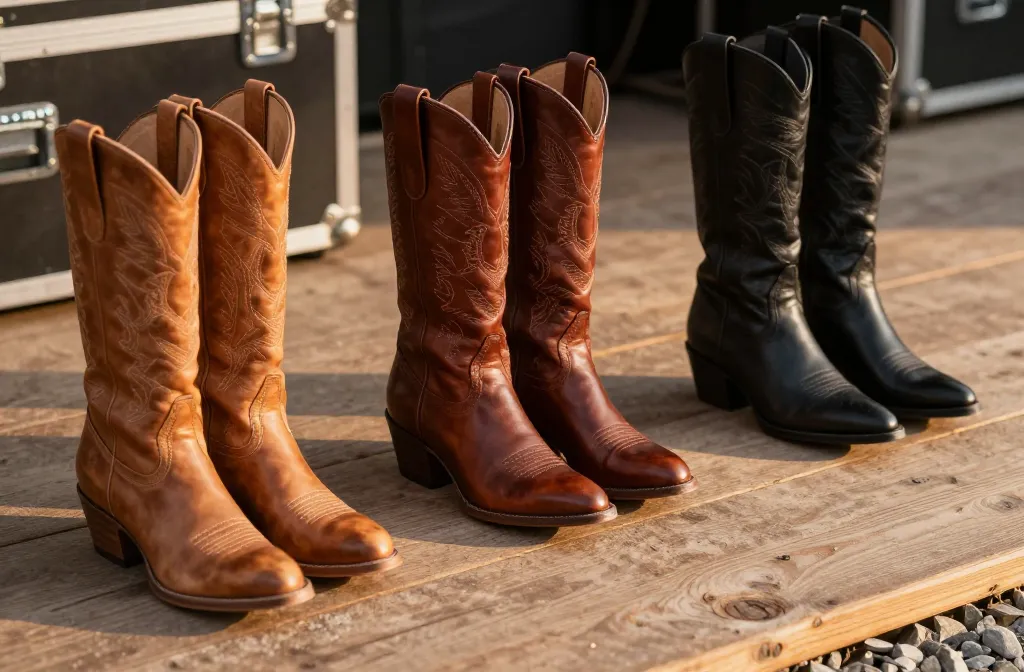
Cowgirl Boots Buying Guide — How to Choose the Right Pair
Here’s the truth about buying cowgirl boots: the wrong pair will end your night before the opener finishes their first song. I once watched a girl cry in a festival parking lot because her boots were shredding her heels raw. She didn’t need new boots — she needed this guide. By the end, you’ll know exactly how a boot should feel on day one, which toe shape matches your life, what leathers actually last, and how to read a width letter like a pro. Save it, screenshot the try-on checklist, and take it to the store with you.
Quick housekeeping: some links below earn me a small commission — never at extra cost to you, and never for anything I wouldn’t wear twice.
Start with Fit — Snug Now, Right Later
Snug instep, slight heel slip, wiggle room for toes — that’s the trifecta. If it’s comfy right out of the box, it’ll be sloppy by month three.
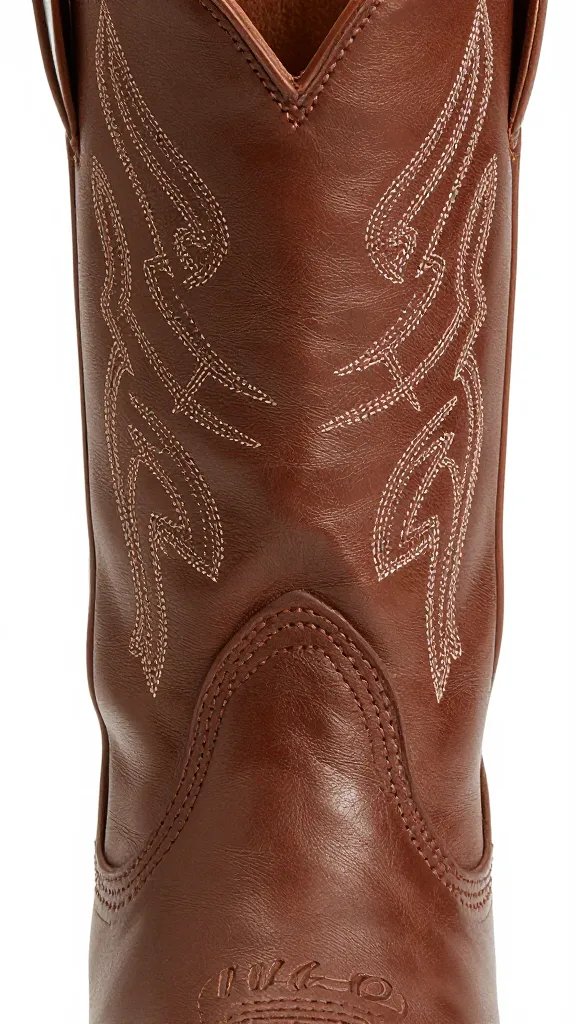
Boots are built to feel different than sneakers, and that confuses almost everyone at first. You want a snug instep (the top of your foot) with a little heel slip — up to a quarter inch — because the sole will flex and the leather molds as you wear it. According to Ariat’s fitting guide, you should hear a faint “pop” when you pull a correctly-sized boot on. If your toes feel pinched in width or hit the end, that’s a hard no.
I’ve learned to try boots in the afternoon when my feet are a little bigger; morning-fit lies. Wear the socks you’ll actually wear to a show, not a thick gym pair that changes the whole equation. And here’s something most guides skip: check that the boot’s arch curve matches yours — if the shank hits your arch in the wrong spot, no amount of break-in will fix it. You’ll just have sore feet and a sad, expensive pair of boots.
Toe Shapes That Earn Their Keep
Your toe shape changes both comfort and vibe. Round toes are roomiest for long nights; snip toes read refined without the squeeze.
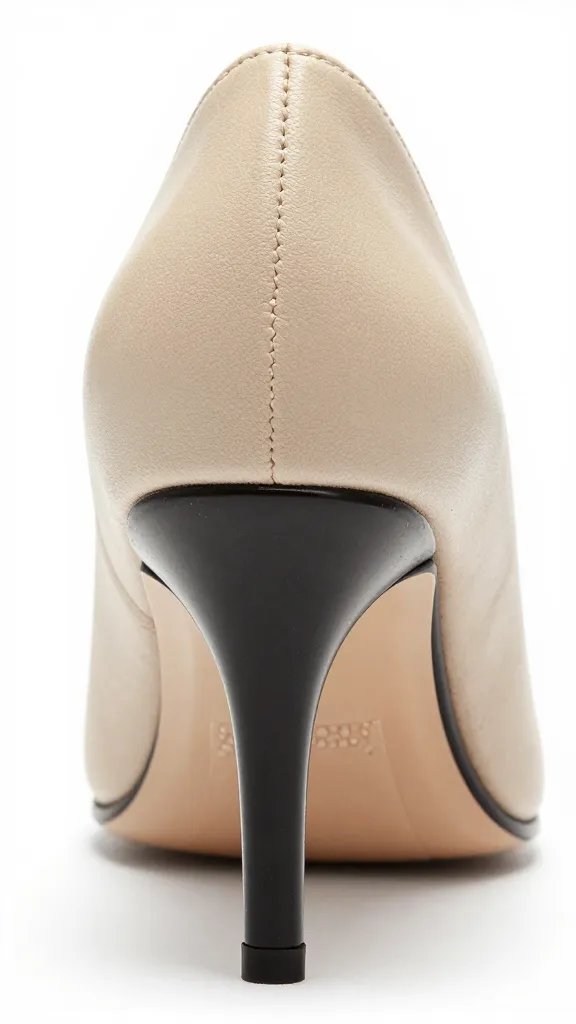
Toe shape gets more complicated than most guides admit. Here’s the quick version:
| Toe Shape | Room | Best For | Vibe |
|---|---|---|---|
| Round | Most | First pair, all-day wear | Classic, easy |
| Snip | Medium | Dancing, date nights | Refined, modern |
| Wide Square | Most | Grass fields, gravel | Ranch, grounded |
| Pointed | Least | Short indoor nights | Dressy, bold |
A round toe is the roomiest and the easiest on long nights — great first pair. A snip toe (soft angle at the tip) reads refined without squeezing like an ultra-point. A wide square toe gives serious toe room and stability; it trends ranch, not dressy. As Paul Bond’s boot guide points out, you can break in other parts of the boot, but you can’t change the size of the toe box — so pick one that fits from the start.
I have a snip toe I’ll two-step in all night and a square toe I grab for grass fields — less sinking, more support. If you’re new, stand on tiptoe in the mirror; your toes shouldn’t crash into the front when you flex.
Heels and Height — What Your Ankles Can Actually Handle
A 1.5–2 inch cowboy heel is the sweet spot for most people. Taller heels are for short nights and flat floors — not festivals.
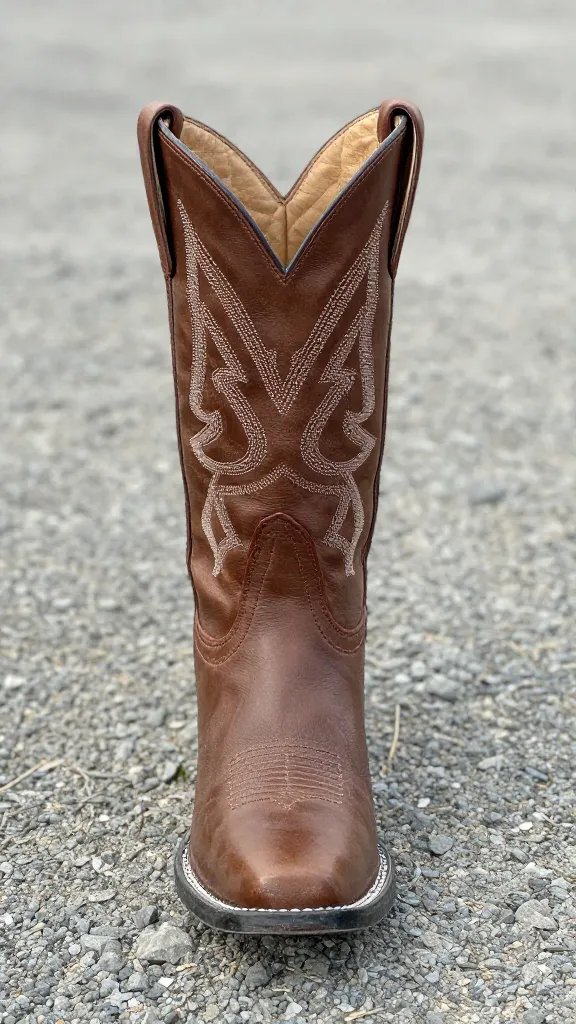
Heel height is the difference between “dancing till lights up” and Ubering at intermission. A 1.5–2 inch cowboy heel is the sweet spot for most people — a little lift, still stable. A walking heel (shorter, blockier) is friendliest on gravel and fairgrounds. Tall, skinny heels and slick leather outsoles are for bar floors and short nights; save them for dinner, not dirt.
Here’s a fun fact most people miss: roper boots were literally born from rodeo athletes needing something they could sprint in between events. Lower heel, round toe, shorter shaft — pure function. If your priority is walking and comfort, a roper isn’t settling, it’s smart.
My first year at a three-day festival I wore a 2.5-inch dress heel day one and spent day two hunting for moleskin — learn from me. If you’re pairing your boots with an outfit and want the full lowdown on proportions, check out the cowboy boots outfit guide.
Shaft Height and Calf Fit — Ankle to Knee, What Works Where
Ankle boots work with straight jeans and skirts; mid-calf is the classic; knee-height goes fashion-forward. Test the shaft sitting and squatting before you buy.
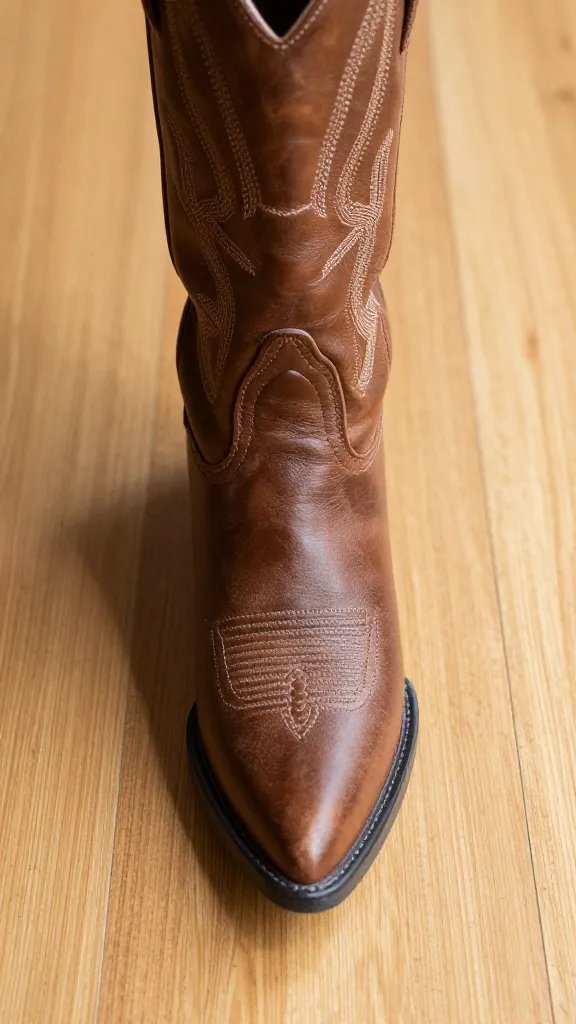
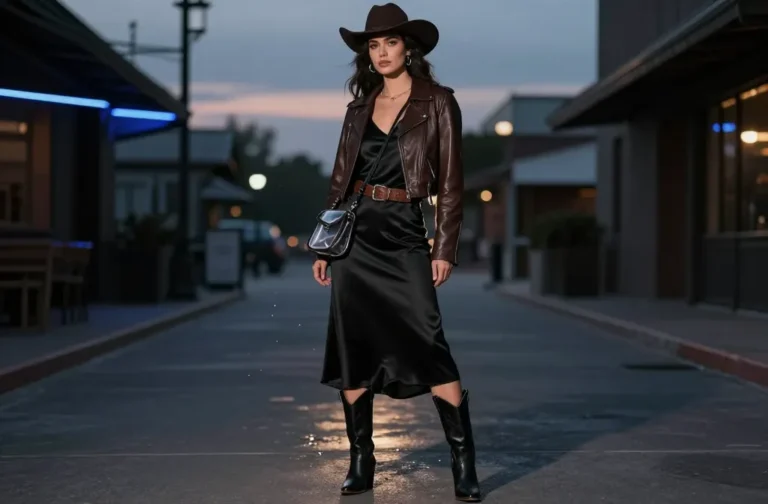
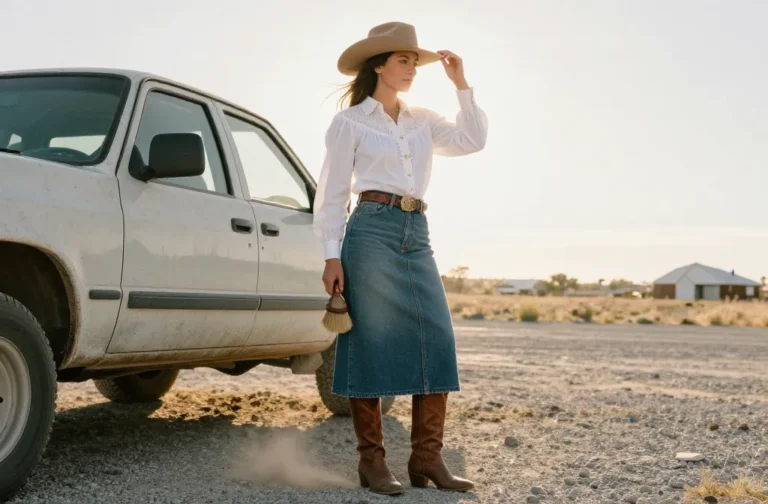
Common cowgirl boot heights: ankle (easy with straight jeans and skirts), mid-calf (classic), and knee (fashion-forward, warmer at night). With jeans, a mid-calf shaft hides under a wider leg and won’t fight your hem. With shorts or a dress, any height works — just check where the top hits your leg; you want room to move, not a squeeze.
If you’re going for the full western look head to toe, the cowgirl hats guide breaks down how hat brim width plays with boot shaft height — turns out proportion matters more than you’d think.
I’ve learned to sit, squat, and step on a curb when I try on — if the shaft bites behind the knee or rubs the front of the ankle, that rub will turn into a blister by song three. And for wide-calf folks, Ariat makes wide-calf options with an extended shaft and expandable elements — you don’t have to squeeze into a standard shaft and hope for the best.
Leather 101 — What Lasts, What Breaks In
Full-grain leather is your workhorse; suede photographs beautifully but shows every splash; exotics look sharp but break in slower.
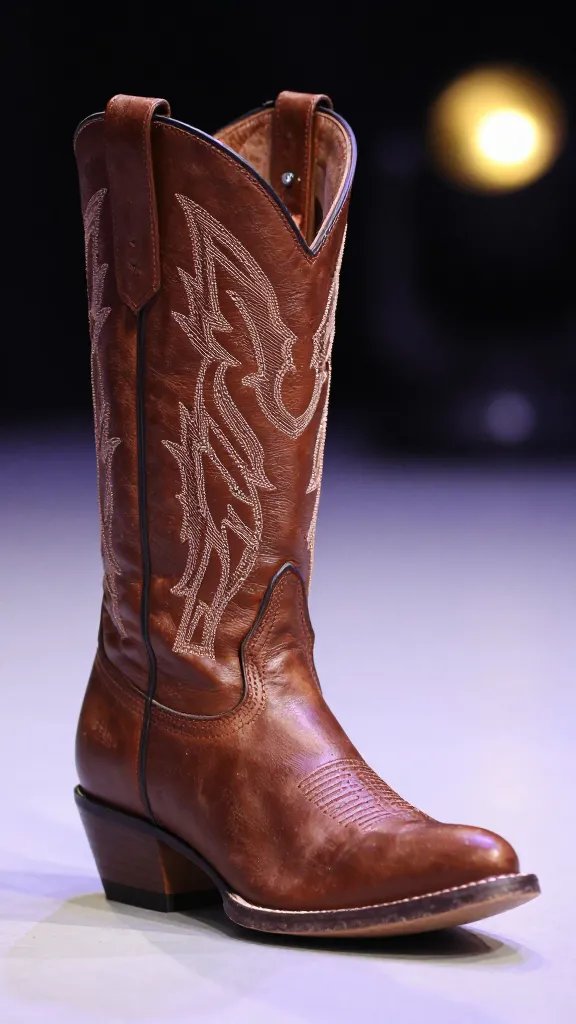
Leather is where budget and longevity collide. Here’s what you’re actually choosing between:
| Leather Type | Durability | Break-In | Watch Out For |
|---|---|---|---|
| Full-Grain | High | 2–3 weeks | Needs conditioning |
| Suede | Medium | Almost none | Water, dust, spills |
| Oiled/Tumbled | High | 1–2 weeks | Casual look only |
| Exotic (lizard, python) | Medium-High | 4+ weeks | Stiff, pricier |
Full-grain is durable, takes scuffs well, and softens with wear — the workhorse for rodeo dirt and stadium steps. Mother Lode Mercantile’s boot guide confirms that full-grain leather actually improves with age and develops character over time. Suede looks rich and photographs beautifully, but dust and drink splashes show; bring a suede brush and weather spray if you go that route. Exotics like lizard or python look sharp, but they’re stiffer and less forgiving; I save mine for indoor shows. For rain risk, look for oiled leather or a pair with a rubber or hybrid sole for traction.
Soles and Support — What’s Underfoot Matters
Leather soles look classic but slip on wet surfaces; rubber soles add grip for real-world terrain. Always check the insole — flat leather inside means you’ll want an insert.
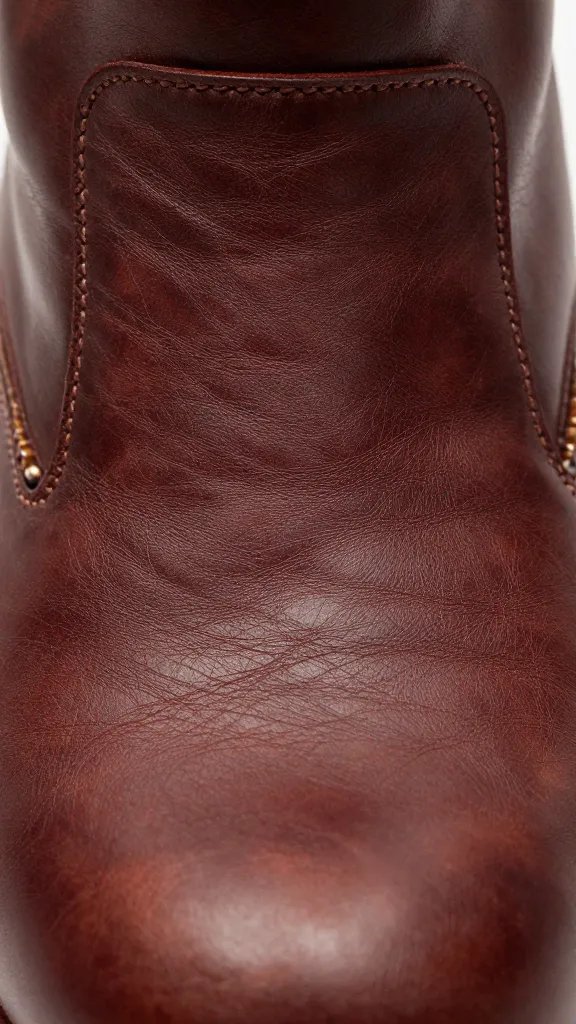
Traditional boots use a leather outsole — smooth, great once it scuffs up, slippery on polished concrete day one. A rubber or composite outsole adds grip on wet grass, ramps, and metal bleachers. Reddit’s r/cowboyboots community consistently ranks Ariat boots with shock shield technology as the most walkable out of the box — worth noting if comfort is your top priority.
Inside, a real insole with arch support is worth hunting for; if the boot is just flat leather inside, plan to add a low-profile insole. I swapped insoles into my dressier pair and it turned a two-hour boot into a six-hour boot with no drama.
Construction — How to Spot the Good Stuff
Goodyear welt or stitched construction means you can resole; glue-only outsoles die young. The flex test and heel counter squeeze reveal everything.
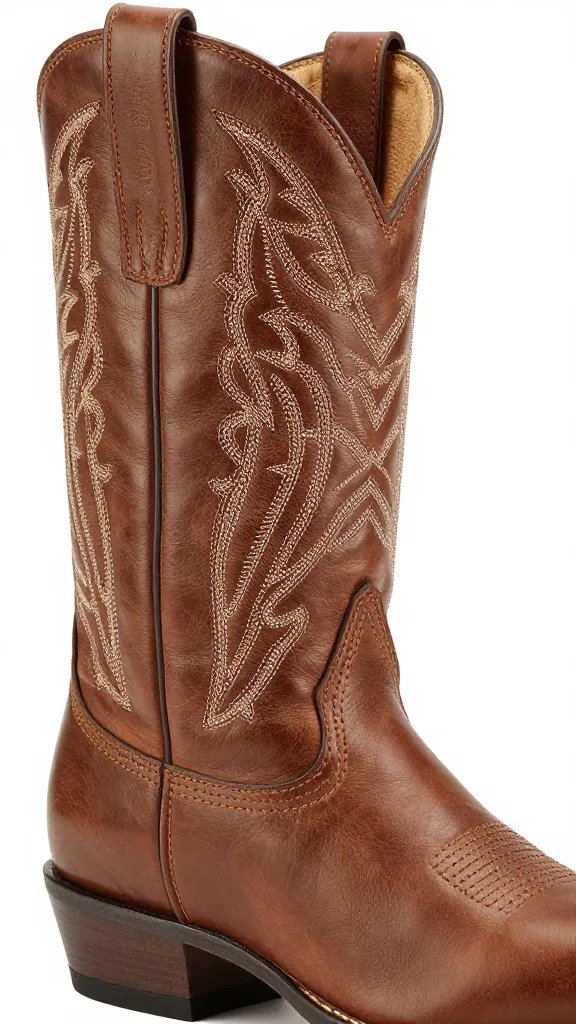
Here’s the single most useful thing I’ve learned about boot construction: a Goodyear welt means the sole is stitched to a strip of leather that’s stitched to the upper. When the sole wears out, a cobbler can replace it without touching the upper — basically giving your boots a second life. Most boots under $150 use cement (glue) construction, which is fine for occasional wear but can’t be resoled. If you’re investing in a pair you’ll wear regularly, ask about the construction method before you pay.
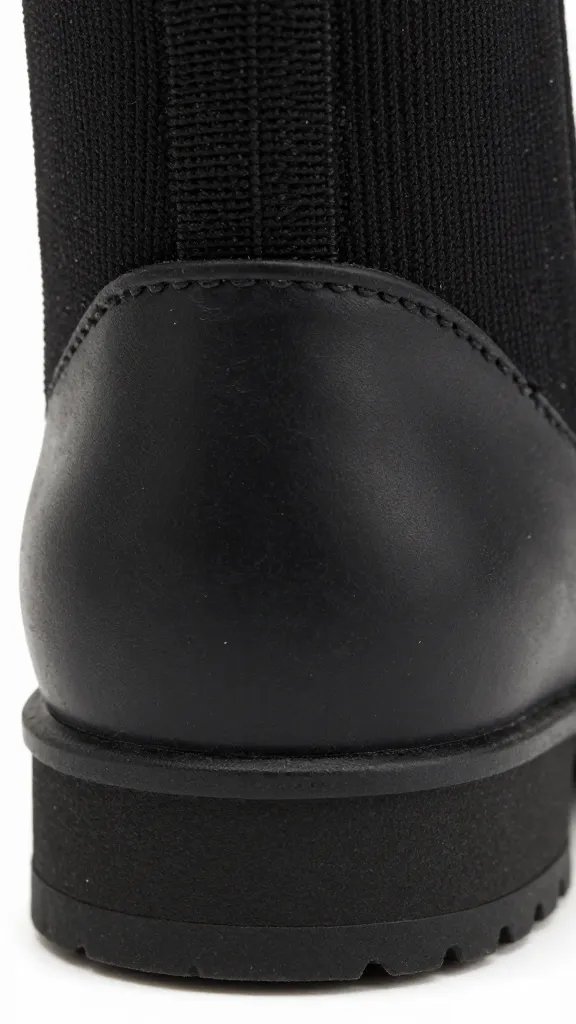
Look at stitching: neat, even rows and tight thread. Flex the boot: it should bend at the ball of the foot, not the arch. Squeeze the heel counter — it should feel firm, not collapse like a slipper. One quick tell I use: run a finger around inside the shaft; rough, scratchy seams mean sock-eating and rubbed ankles.
Break-In Without Blisters
Two-hour carpet sessions first, then a grocery run, then a full evening. Moleskin on hot spots before they become hot spots.
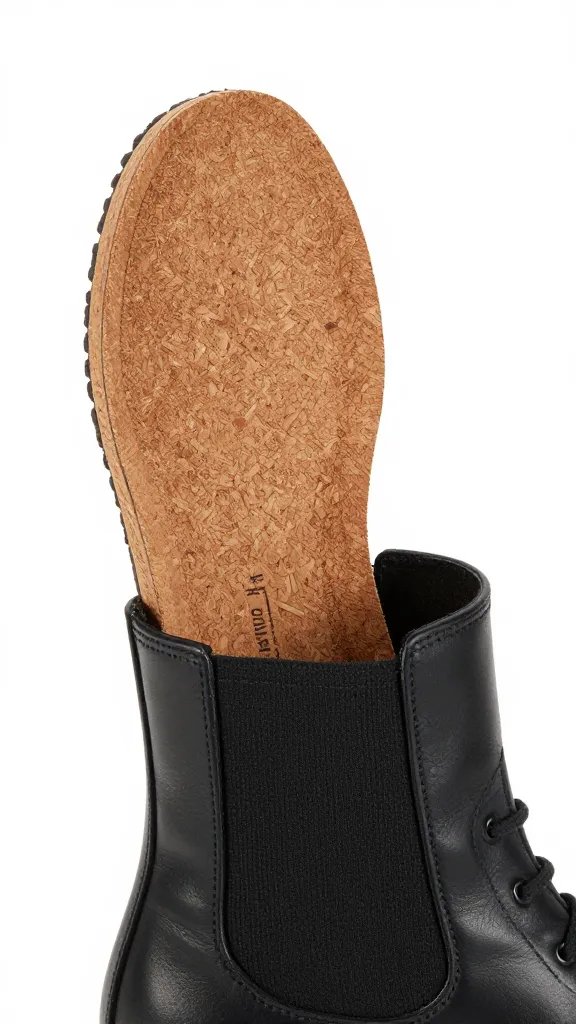
Here’s what nobody tells you about break-in: leather stretches forward, not sideways. That’s why boot sizing experts recommend sizing down if you’re between sizes — the length will give, but the width won’t change much. Plan a home break-in: two or three hour sessions on carpet first, then a grocery run, then a full evening.
Use moleskin on known hot spots before they’re hot. A tiny dab of leather conditioner across the instep can help tightness; never soak boots. I wear thin, slick socks at first — less friction than thick cotton. And I keep blister patches in my bag the first night out, because being prepared is cooler than limping. For a deeper dive on speeding up the process, the new cowboy boots break-in guide has the full rundown.
Width Letters Decoded — Stop Guessing, Start Fitting
Cowgirl boots use lettered widths — B is standard for women, D for men, EE for wide. Ignoring the letter is the number one reason “the right size” still hurts.
This is the part almost every buying guide skips, and it’s where most people go wrong. Boot width uses a letter system, and the letters mean different things for men and women:
| Width Letter | Women’s | Men’s |
|---|---|---|
| B | Standard (narrow) | Narrow |
| C | Wide | Medium-narrow |
| D | Extra wide | Standard (medium) |
| E / EE | — | Wide |
| EEE | — | Extra wide |
Per Tecovas’ width guide, an EE-width boot is about ½ inch wider than a standard D-width — sounds tiny, but your feet will feel every millimeter. And Justin Boots confirms that B width is the standard for women’s cowgirl boots specifically — so if you’ve been squeezing into a brand’s “regular” that actually runs narrow, that might be your problem.
I wore the wrong width for years before someone at a boot shop measured me properly. I’d been buying standard women’s boots when my feet actually needed a wide — no amount of “breaking them in” fixed a width problem. Get measured once, write down your letter, and filter for it when you shop online. Your feet will send you a thank-you note.
Cowgirl Boots Buying Guide for Different Terrains
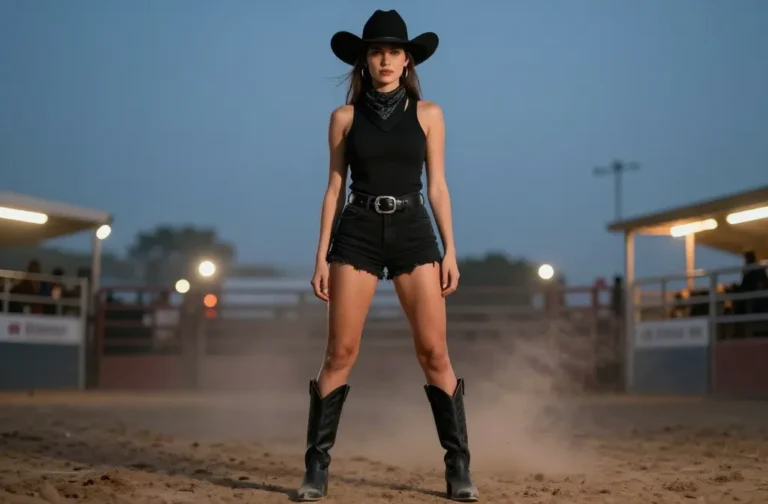
Venue ground changes everything — grass demands rubber soles, arena dirt needs leather, and asphalt eats slick heels alive. Match the boot to the ground, not just the outfit.
Here’s a quick terrain cheat sheet:
| Terrain | Sole | Heel | Toe |
|---|---|---|---|
| Grass & fields | Rubber/hybrid | Block/walking | Wide square |
| Arena dirt | Leather/hybrid | Cowboy | Round/snip |
| Asphalt/stairs | Rubber | Walking/low cowboy | Round |
| Bar floors | Leather OK | Any | Any |
| Rain/mud | Rubber | Block | Oiled leather |
If rain’s in the forecast, treat leather in advance and toss a packable poncho; umbrellas are usually banned at big shows. I’ve slid on painted concrete enough to learn that one bad fall is too many — traction isn’t optional.
Cowgirl Boots Buying Guide for What You Wear Them With
Skinny jeans want ankle or mid-calf shafts; straight and bootcut jeans want mid-calf; shorts and dresses give you freedom on height. Always do the sit-test in the actual outfit.
With skinny jeans: ankle or mid-calf shafts slide on easy; pick a snip or round toe for balance. With straight or bootcut jeans: mid-calf shaft, any toe; check hem length with the boots you’ll wear — jeans should graze the top of the heel, not the floor. For the complete rundown on every outfit combo, the cowgirl outfits style guide covers head-to-toe pairing with all boot types.
With shorts or a mini dress: any shaft height, but think about heel stability for lawn seating. I always do the sit-test in the outfit I plan: if the boot top digs when I sit on the grass, I switch pairs.
Style vs. Practical — Embroidery, Inlay, and Bling
Embroidery on the shaft is usually fine; raised overlays and metal details add stiffness. Rhinestones are fair game — just check the interior lining for scratchy backing.
Decor is fun; it also adds seams that can rub. Embroidery on the shaft is usually safe; raised overlays can stiffen a boot. Metal toe caps look sharp and protect, but they add weight. Rhinestones are fair game — just check interior lining for scratchy backing.
Small western-history note: rhinestones rode into country music with rodeo-tailor show suits because stage lights love sparkle — it was function before it was flair. So next time someone says bling isn’t practical, tell them the cowboys did it first.
Sizing Across Makers — How to Get It Right Online
Start with your Brannock size, not your sneaker size. Every brand runs different — Ariat tends small, Justin square toes run roomier. When in doubt, order two sizes.
Boot sizing runs different than sneakers, and it runs different between brands, which is where online shopping gets tricky. Start with your true Brannock size if you know it; most shoe stores have one and it measures both length and width.
Here’s what real-world experience and boot sizing guides confirm about brand quirks:
- Ariat — often runs ½ size small, especially in performance and work lines. Their Heritage Ropers fit snugger than their Westerns.
- Justin — runs true to size for most, but square toes fit roomier than pointed. Their width options are B, D, and EE.
- Tecovas — designed to fit true to standard U.S. sizing, available in D and EE widths.
- Lucchese — heritage brand, says it right: “loo-kay-zee.” Runs traditional; quality is exceptional.
Read the last shape notes if provided (narrow, standard, wide). I order two adjacent sizes when I can and keep the one with snug instep, toe wiggle, and a whisper of heel slip. If you need wide width, filter for it — stretching width after the fact is pain and compromise.
Care and Weather-Proofing — Keep Them Pretty, Not Precious
Condition full-grain leather before dusty events, then water-repellent spray. Suede needs protector spray and a brush after. Wipe spills the same night — always.
Before a dusty event, brush and condition full-grain leather; then a light water-repellent spray. For suede, use a protector spray and a suede brush after to lift dirt. Wipe salt and beer off the same night with a damp cloth, then let dry away from heat. Store with boot shapers or rolled magazines so the shafts don’t slump.
I keep a cheap microfiber cloth in the truck — a two-minute wipe keeps boots aging nicely instead of grimy. The cowboy boot care guide and suede western boots cleaning guide have the full deep-dive if you want the complete routine.
Budget, Value, and When to Spend
Spend on fit and construction first, ornament second. If you’ll wear them twice a month, resole-able boots pay for themselves in a year.
Spend on fit and construction first: real leather uppers, lined shafts, stitched welt if you can. Save on heavy ornament if it pushes you into a worse-fitting boot. If you’ll wear them twice a month for years, value lives in resole-able pairs. For a single festival trip, a well-made entry-level leather boot with a rubber sole will treat you kinder than a fancy pair with a slippery bottom.
Per the D Magazine boot guide, you can find genuine leather boots starting around $50 at the right shops — but if you’re investing for the long haul, custom shops like Morris Boot Co. in Fort Worth make every pair by hand. There’s a boot for every budget; the trick is knowing where to put your money.
Try-On Ritual — Five Checks Before You Buy
Snug instep, toe wiggle, slight heel slip, flex at the ball, sit-squat-stair test — do all five before you swipe your card.
- Instep check: snug, not choking; you can slide a finger under the pull tabs without straining.
- Toe check: wiggle room; stand on tiptoe and confirm no front collision — your longest toe should sit about ½ inch from the tip.
- Heel check: slip present but small (up to ¼ inch); walk a loop and feel it settle.
- Flex check: boot bends at the ball of the foot; no bowing through the arch.
- Move check: sit, squat, and take stairs; no shaft bite or seam rubs.
What to Skip for Real-World Shows
Skip mirror-slick soles for wet lawns, unlined shafts for bare legs, and too-tall heels for dirt venues. If a boot needs thick socks and a prayer to feel okay, skip it.
Skip mirror-slick leather soles if your next stop is a wet lawn. Skip unlined shafts if you’re wearing bare legs — they rub. Skip too-tall heels for fairgrounds and arenas; save them for short, indoor nights. And if a boot only feels okay with thick socks and a prayer, skip it; break-in should be softening, not survival.
Frequently Asked Questions
How should cowgirl boots fit when I first try them on?
Snug over the instep with a little heel slip (up to ¼ inch) and wiggle room for your toes — the boot should flex at the ball of your foot. Walk, sit, squat, and take a stair to check for rubs; if something pinches now, it won’t magically fix itself with wear.
What heel height is best for all-day wear?
A 1.5–2 inch cowboy or walking heel balances comfort and posture — it’s stable on grass and gravel and still looks classic. Taller, skinny heels are for short indoor nights; if you’re standing more than two hours, go lower.
Which leather is best for a first pair of cowgirl boots?
Full-grain leather is the most forgiving and durable — it breaks in well, handles dust and scuffs, and can be conditioned back to life. Suede is beautiful but higher maintenance around spills and rain; save it for your second pair once you know your routine.
Can I wear cowgirl boots in the rain or on wet grass?
Yes, if you prep them and pick the right sole — use a water-repellent spray on leather or suede, and choose rubber or hybrid outsoles for traction. Wipe them dry after and let them air-dry away from heat; never put wet boots near a radiator.
Are cowgirl boots true to size across brands?
No — lasts vary by maker, and Ariat is known for running ½ size small while Justin square toes fit roomier. Use your Brannock measurement as a starting point, note the width letter, and order two adjacent sizes when shopping online.
What width letter do I need for cowgirl boots?
For women, B is standard (narrow), C is wide, and D is extra wide — men’s sizing shifts one letter over with D as standard. Measure the widest part of your foot across the ball and compare to the brand’s specific chart, because an EE in one brand isn’t the same as an EE in another.
Go Pick Your Pair
You’ve got this — and your feet will thank you. Tonight, get your Brannock measurement (any shoe store can do it), grab the socks you’ll wear, and set a try-on plan with those five checks. The right boots make standing room feel like a good decision, and the right width letter makes everything else click.
Once you’ve got the right pair, Dottie Rae’s got the upkeep covered: Cowboy Boot Care Guide, New Cowboy Boots Guide, and Suede Western Boots Cleaning Guide.
Questions or a pair you’re deciding between? Drop it below — see y’all in the pit ✦



One Comment