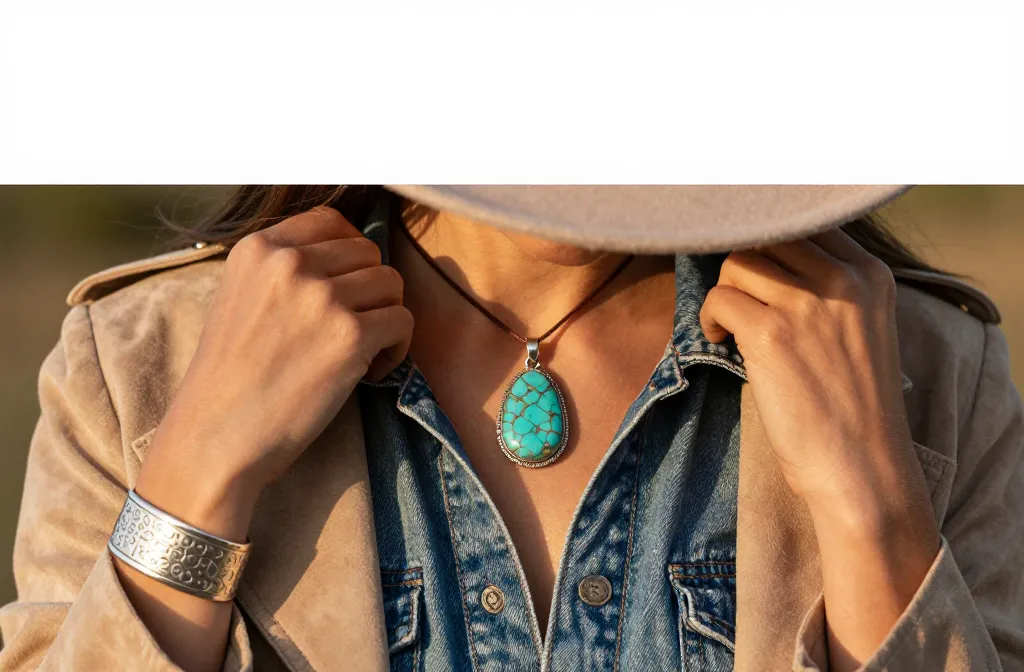
Turquoise Jewelry Guide — The Western Style Staple
Turquoise jewelry has been on my dresser since high school, and it still earns its place every week. I wore a small turquoise pendant to my first barn wedding as a young woman and a cuff to my niece’s last spring; both felt right, both read Western without shouting. This guide covers how to choose real turquoise that lasts, understand the difference between natural and stabilized stone, pair pieces with what you already own, and care for them so they age well — including why the stone sometimes changes color and what you can do about it.
Quick housekeeping: Some of these links pay the blog a little commission. It doesn’t change the price, and it’s never why something made the list.
Why Does Turquoise Jewelry Work With Every Western Outfit?
Turquoise pairs with denim, leather, suede, and cotton because its blue-green tones lighten dark fabrics and warm up neutrals without competing. It’s one of the few stones that reads casual and dressy at the same time, which is why it’s been a Western staple for over a century.
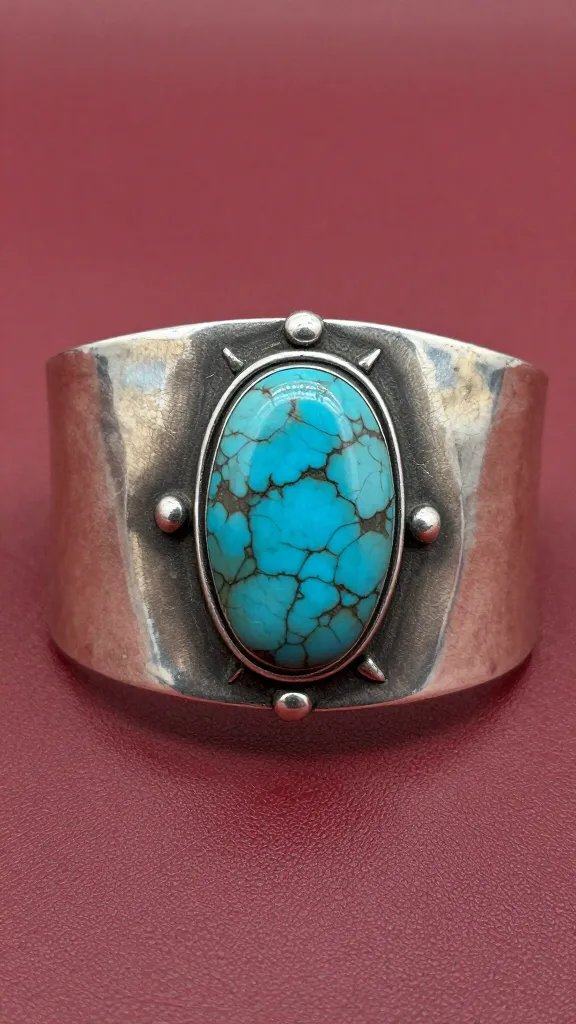
The blue-green stones lighten denim, warm up browns and tans, and bring life to black without fighting it. Thirty years of barn weddings taught me this truth: when your outfit is simple and your day is long, one solid turquoise piece carries the room while staying comfortable. The matrix patterns and hand-cut shapes give quiet movement that photographs well in sun or shade.
Western style gets loud when everything is loud; turquoise lets you keep the boots honest and the clothes practical while adding a human touch. The stone has been part of Southwestern adornment for thousands of years — Ancestral Pueblo people traded turquoise along routes stretching from the Pacific Northwest to Central America, with Chaco Canyon serving as the great hub. When you wear a turquoise pendant today, you’re continuing a tradition that predates the railroad by centuries.
What Kind of Turquoise Should You Buy — Natural, Stabilized, or Something Else?
Most turquoise on the market is stabilized with resin for durability; natural stone is rarer and pricier; reconstituted and block turquoise contain little to no real stone. For everyday jewelry, stabilized offers the best balance of beauty and toughness. For collecting, go natural.
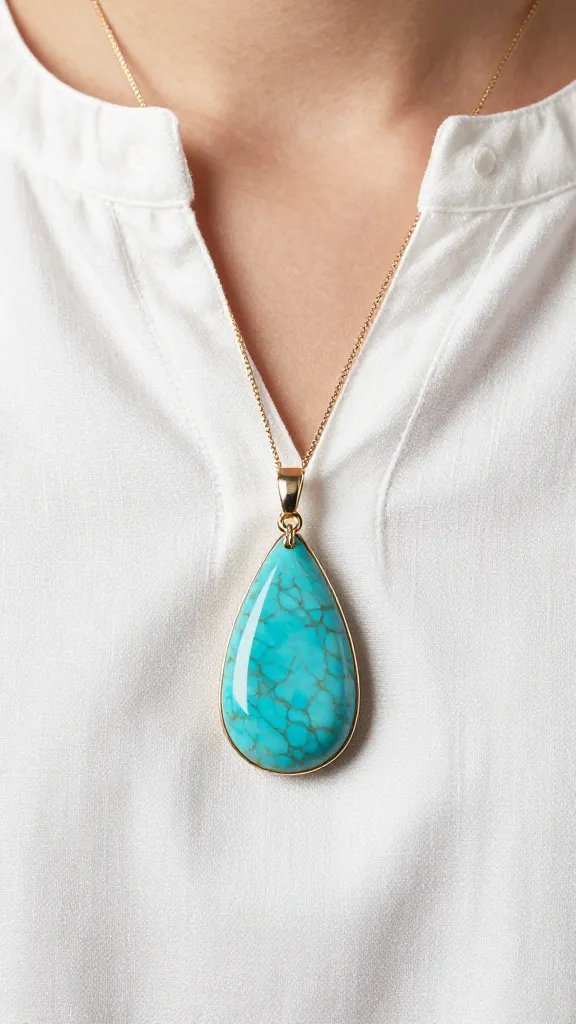
Here’s the spectrum, because most guides leave this out and it matters when you open your wallet:
- Natural (untreated) — mined and cut with no chemical enhancement. Can change color over time as it absorbs skin oils. Rarest and most expensive. If you want natural, ask directly; GIA recommends buying from a jeweler with gemological expertise who will disclose treatment status.
- Stabilized — soaked in clear epoxy resin under pressure to harden porous stone and lock in color. The process originated in Kingman, Arizona, and takes nothing away from the stone. Roughly 90% of turquoise on the market is stabilized, and it’s perfectly good jewelry.
- Color-enhanced — stabilized with added dye. Real turquoise, but the color isn’t what came out of the ground. Less valuable than plain stabilized.
- Reconstituted — turquoise dust and chips ground up, mixed with resin, and pressed into blocks. Contains some real stone but mostly filler. Cheap and not worth your time.
- Block or imitation — dyed howlite, plastic, or synthetic material with no turquoise at all. Howlite is the most common stand-in, and it’s softer than real turquoise — scratch the underside and if it flakes easily, you’ve found a fake.
A friend of mine bought a stabilized Kingman bracelet at a trading post outside Flagstaff years ago. She wears it every single day — dishes, gardening, horse trailers, all of it. After a decade, the stone has deepened slightly around the edges where her wrist oils worked in. She calls it “developing character.” The alternative — a cheap block-stone bracelet from a tourist shop — would have cracked or turned an unrecognizable shade within a year.
How to Read a Turquoise Comparison Chart
| Type | Real Turquoise? | Durability | Color Stability | Price Range | Best For |
|---|---|---|---|---|---|
| Natural | Yes, untreated | Soft (5-6 Mohs) | May darken or green with wear | $$$-$$$$ | Collectors, heirloom pieces |
| Stabilized | Yes, resin-treated | Hard, resilient | Holds color well | $$-$$$ | Everyday jewelry, gifts |
| Color-enhanced | Yes, dyed + stabilized | Hard | Stable but artificial color | $-$$ | Fashion pieces on a budget |
| Reconstituted | Partially (dust + resin) | Moderate | Fades over time | $ | Not recommended |
| Block / Imitation | No | Low | Fades, may stain skin | $ | Craft projects, not jewelry |
What Should You Look For in Color and Matrix?
Stones range from pale robin’s egg to deep green-blue; none is “better,” but mid-blue with light-to-medium matrix is the most versatile. I reach for mid-blue on workdays and save the bold green-blue for linen or suede days. If you wear a lot of black and white, a higher-contrast matrix (tan or chocolate webbing) adds interest; with busy plaids or florals, go quieter — less matrix, more even color.
The GIA judges turquoise on three factors: color, texture, and matrix. The most valuable is an even medium blue with no matrix and a good polish. But “most valuable” doesn’t always mean most wearable — a pretty spiderweb pattern catches the eye in ways that a flat blue slab doesn’t.
Which Cut and Shape Last the Longest?
Cabochons (domed, polished stones) are classic and stand up to everyday knocks. Freeform shapes lean artsy and pair well with flowy dresses. Heishi beads and hewn nuggets read casual and travel well because they pack flat and don’t snag. I learned the hard way that tall, pointy settings catch on sweater cuffs — lovely, but they live in my “dress events only” box now.
Scale matters. If you want one buy-once splurge, choose a medium cuff or a pendant about the size of a large coin. It shows in photos, balances a hat brim, and never feels fussy at the grocery store. Tiny studs are kind to helmets and headphones. Oversized slabs are fun but ask for quiet clothes and short sleeves.
Which Turquoise Mines Produce the Best Stones?
The most recognized American turquoise mines are Kingman, Sleeping Beauty, and Royston — each producing stone with distinct color and matrix patterns shaped by local copper and iron content. Mine names matter less than the stone in front of you, but knowing origins helps you understand what you’re paying for.
This is the part almost every guide skips, and it’s where the real education lives. Turquoise forms when groundwater dissolves copper, aluminum, and phosphorus from host rock and deposits them in cracks and cavities — a process that takes thousands to millions of years. Copper gives turquoise its blue; iron and aluminum shift it toward green. So two mines fifty miles apart can produce stones that look completely different because their underground chemistry differs.
| Mine | Location | Signature Look | Status | What to Know |
|---|---|---|---|---|
| Kingman | Northwestern Arizona | Bright blue, often with black spiderweb matrix | Still active (one of the oldest U.S. mines) | “High blue” is the industry color standard. Some of the finest material has been depleted, but new natural stone is being dug from older sections. |
| Sleeping Beauty | Globe, Arizona | Consistent light blue, minimal matrix | Closed in 2012 | Considered among the world’s finest. Increasingly rare and collectible since closure. Its reputation for consistent color and clean stone made it a global fashion favorite. |
| Royston | Nevada | Blue-green with brown or dark web matrix | Active | Produces a wide range of colors. The brown matrix gives it an earthier feel than Kingman’s black webbing. |
| Morenci | Southeastern Arizona | Deep blue, often with pyrite (fool’s gold) inclusions | Closed | High copper content creates its signature deep blue. Pieces with visible pyrite flakes are the most sought-after. |
| Lander Blue | Nevada | Small, hard, intense blue with fine spiderweb | Depleted | One of the rarest and most valuable. Genuine Lander Blue commands top dollar because the stones are small but incredibly hard and vivid. |
A neighbor who collects stones told me once that you can learn to identify general origin by holding a piece up to good light. Kingman tends to have a sharper, more electric blue; Royston leans warmer; Sleeping Beauty is almost eerily even. She said it took her twenty years of handling real pieces to develop that eye. I’m not there yet, but I can tell you this — when you’ve seen enough genuine stones, the fakes start to look flat and chalky, like a photograph of a place rather than the place itself.
One honest caveat from experienced dealers: “Only the miner and the good Lord above truly know where a stone originates.” Mine names add value when they’re documented, but don’t pay a premium for a name a seller can’t verify.
What Metal Settings Look Best With Turquoise?
Sterling silver is the Western standard for turquoise because it cools the warmth of the stone, resists daily wear, and takes a simple polish. Gold or gold vermeil reads dressier and brings out green tones in some stones. Check every setting for smooth edges and a bezel that hugs the stone tight.
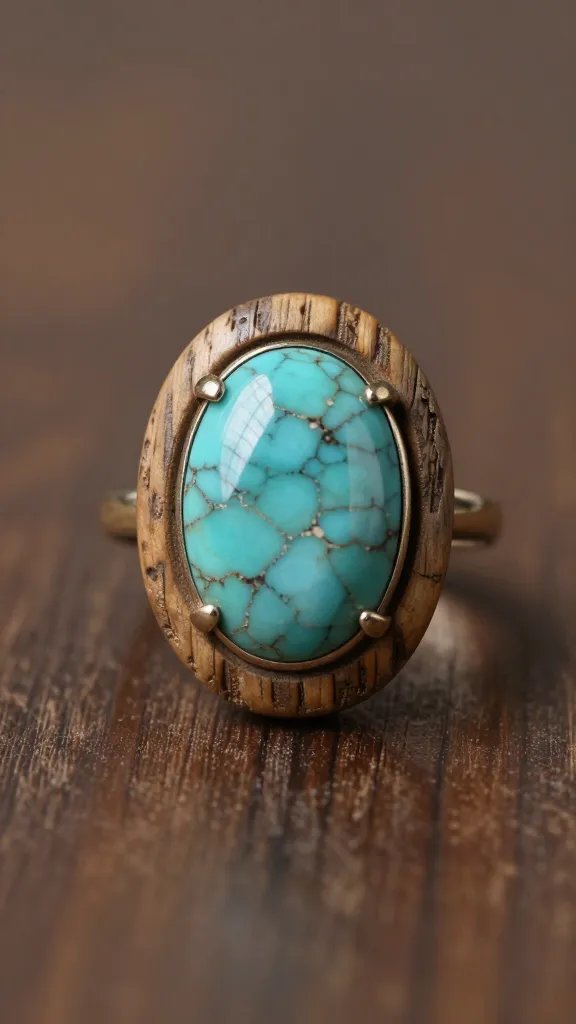
Sterling silver is strong, easy to keep bright with a simple polishing cloth, and it cools the warmth of the stone. Oxidized silver or hand-stamped bezels add depth and look good with raw denim. If your wardrobe skews warm (camel, rust, cream), yellow gold or gold vermeil makes turquoise glow but will read less “ranch” and more “desert dressy.” I have one small gold-set pendant for church and summer weddings; everything else I keep in silver because it takes dust, rain, and long drives without worry.
Check the back of pendants and the inside of cuffs for solid construction: smooth edges, a bezel that hugs the stone, and a band that doesn’t flex like a bread tie. If a cuff pinches when you gently squeeze it to fit, pass. Jewelry should adjust once when you buy it and hold that shape. When you’re exploring rings, the western rings & jewelry guide covers which settings hold up to real work and which are best saved for evenings.
How Do You Style Turquoise Jewelry Three Reliable Ways?
Pair turquoise with denim for everyday ease, with dresses for weddings and gatherings, and with layered basics for travel — adjusting scale and count to match the occasion. The rule is simple: one lead piece, the rest quiet backup.
Denim Days
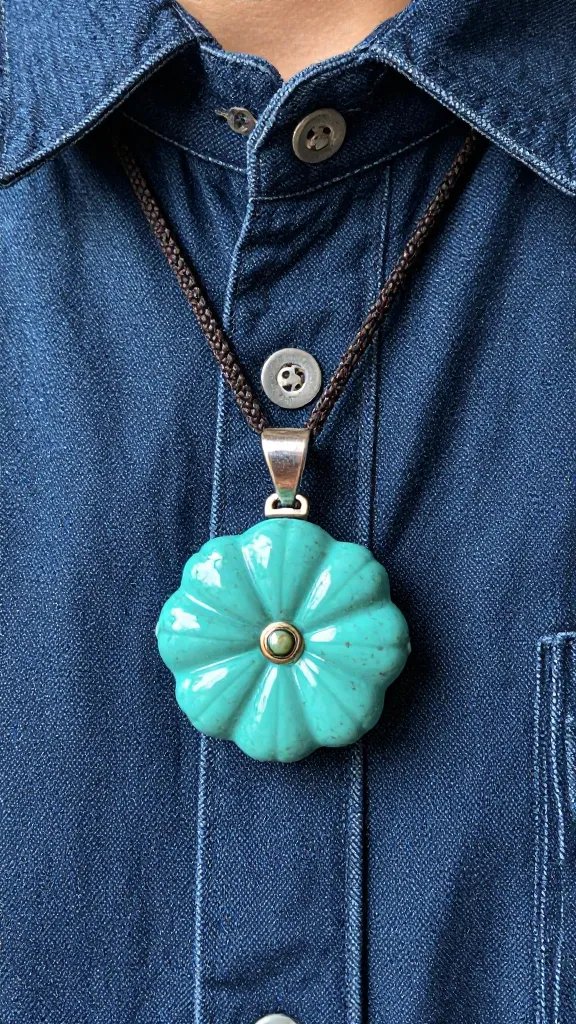
Uniform: chambray shirt, straight jeans, roper boots. Add a medium turquoise pendant on a leather cord or silver chain. If you wear a belt with a simple buckle, finish with studs and skip the bracelet; if no belt, a slim heishi necklace stacks well with the pendant.
Why it works: blue stone over blue denim feels tied-together. The leather cord softens the silver for daylight errands and feeds right into a grocery run or a feed store stop. For more ideas on combining stones, the turquoise layering guide walks through pairing turquoise with coral, shell, and other Western stones.
Dresses and Weddings
Uniform: cotton wrap dress, suede or leather sandals or dress boots. Choose one cuff and one earring — either medium drops or studs. If your dress has a V-neck, a small pendant fills the space; with a high neck, skip the necklace and let the cuff carry it.
What I learned: I wore a heavy squash blossom once to an outdoor July ceremony. Looked lovely, felt like armor in the heat. Since then, I keep weddings to two turquoise pieces max and let fabric and fit do the rest.
Work and Travel
Uniform: knit tee, field jacket, dark jeans, comfortable boots. A small bead strand or button studs add life without jangling in a truck or airplane. Add a stacking ring if your hands won’t be in gloves.
Small trick: on long drives between Bandera and Luckenbach, I put a pendant on a longer chain so it doesn’t rest under a seat belt. Little comforts matter when the county road turns to washboard.
How Do You Match Turquoise to Necklines, Hats, and Hair?
Neckline determines necklace length, hat brim determines earring length, and hair up or down determines which piece gets the spotlight. Match the jewelry to the frame around your face, and everything falls into place.
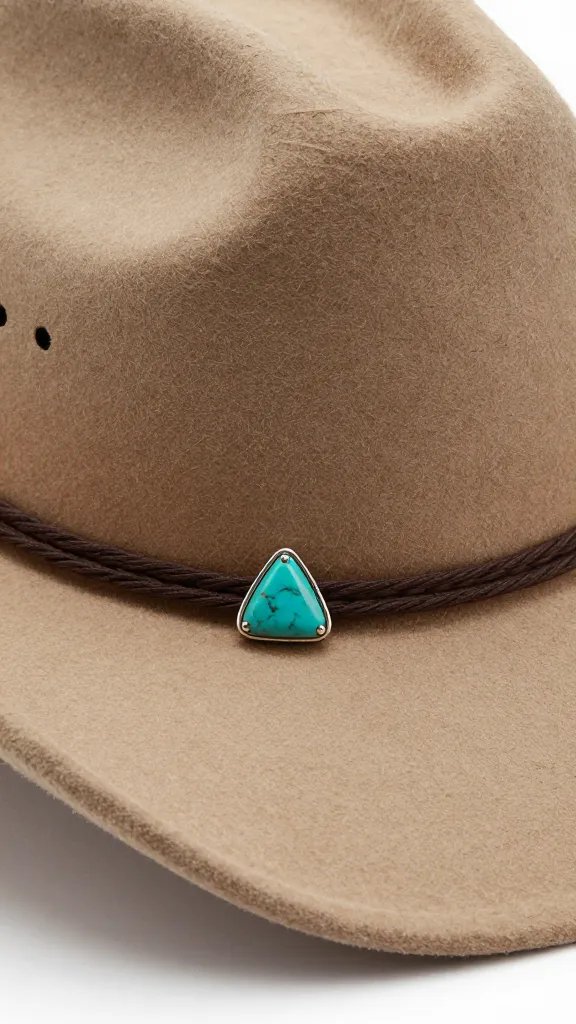
Necklines decide necklace length. Crew necks pair with 18–20 inch pendants; V-necks like a drop that ends one inch above the point; button-downs can take a 24-inch pendant or layered beads inside the placket. Turtlenecks want a cuff and earrings instead — necklaces fight the knit.
Hats frame the face. With a wide-brim felt, choose earrings that stop above your jawline; anything longer bangs the brim when you turn your head. Straw hats are lighter; small drops or hoops play well. Hair matters too: with long hair down, a cuff and ring show more than small earrings; with hair up, studs or short drops brighten your eyes.
If you’re building a full outfit around these choices, the cowgirl outfits complete style guide walks through head-to-boots coordination so every piece works together.
Why Does Turquoise Change Color — and How Do You Keep It Happy?
Turquoise is porous and can absorb skin oils, lotions, and water, which gradually darken or green the stone — a change that’s permanent and can’t be reversed. The best care is prevention: put jewelry on last, take it off first, and wipe it after every wear.
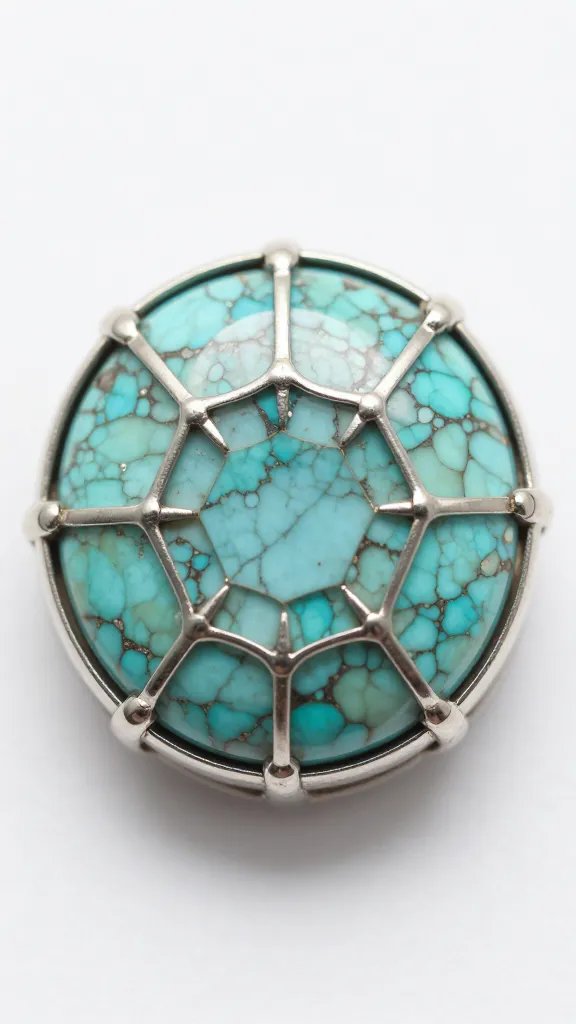
Here’s the science, because understanding why makes the rules easier to follow. Turquoise is a hydrated copper aluminum phosphate — its blue comes from copper ions in its crystal structure, and its green shifts come from iron. The stone forms over thousands of years in arid copper-rich rock, and it stays porous long after you bring it home. GIA notes that most turquoise absorbs skin oil and can gradually darken, especially beads and rings that stay against the body.
This is why your grandmother’s turquoise might look different from the day she bought it. The stone is doing what it’s always done — interacting with its environment. Skin with a more acidic pH can push the color toward green faster. Sunscreen, lotion, and perfume are worse because they carry oils and chemicals that penetrate deeper. Once a stone has greened, it cannot be returned to its original blue, so prevention is the only strategy that works.
Practical care, in order of importance:
- Keep it away from lotions, perfumes, sunscreen, and household cleaners. Put it on last, take it off first.
- Wipe with a soft dry cloth after wear. This removes skin oils before they soak in.
- Store in a fabric pouch or divided tray so silver doesn’t rub silver and harder stones don’t scratch the surface. Turquoise sits at 5-6 on the Mohs hardness scale — softer than most gems you own.
- For tarnished silver around a stone, use a polishing cloth on the metal only. Do not dip in chemical cleaners; they pull oils from the stone and can change color.
- Never use ultrasonic cleaners. The vibrations can crack and pit the soft stone, and the chemical solutions will be absorbed.
- If mud or dust gets in, a slightly damp cotton swab on the metal is fine; keep water off the stone itself.
I once dried a splashed cuff in the truck’s warm air vent and it looked fine, but I don’t tempt fate — water spots are stubborn. Extreme heat and sudden temperature changes can stress the stone, so keep it out of hot cars and direct sun when you’re not wearing it.
What Fabrics and Colors Pair Best With Turquoise?
Turquoise looks best with natural fibers — denim, cotton, linen, suede, and wool — and pops against black, cream, and charcoal while warming up earth tones. Synthetic fabrics tend to dull the stone’s matte warmth, so let natural textures do the work.
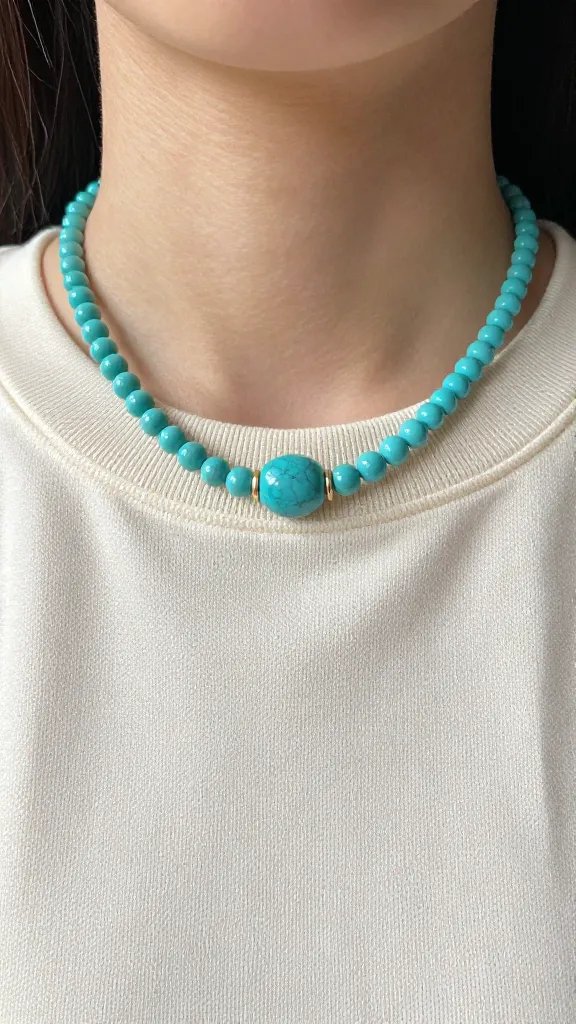
Denim, chambray, cotton poplin, linen, suede, and wool give the right balance of matte and movement. It pops on black and cream, warms up charcoal, and calms bright red. If you love prints, choose smaller-scale stones or studs so you don’t end up busy on busy.
Shoes and bags matter less than you think. Brown leather and turquoise are old friends. Black boots with turquoise read modern Western. If you carry a bag with a lot of fringe or conchos, let your jewelry go simpler — one pendant or studs. The goal is harmony, not a parade.
What Turquoise Mistakes Waste the Most Money?
The most expensive mistakes are buying too many large pieces at once, choosing flashy settings that don’t suit daily life, and storing turquoise loose where stones scratch each other. Build slowly, buy real, and let your actual routine — not a magazine spread — guide each purchase.
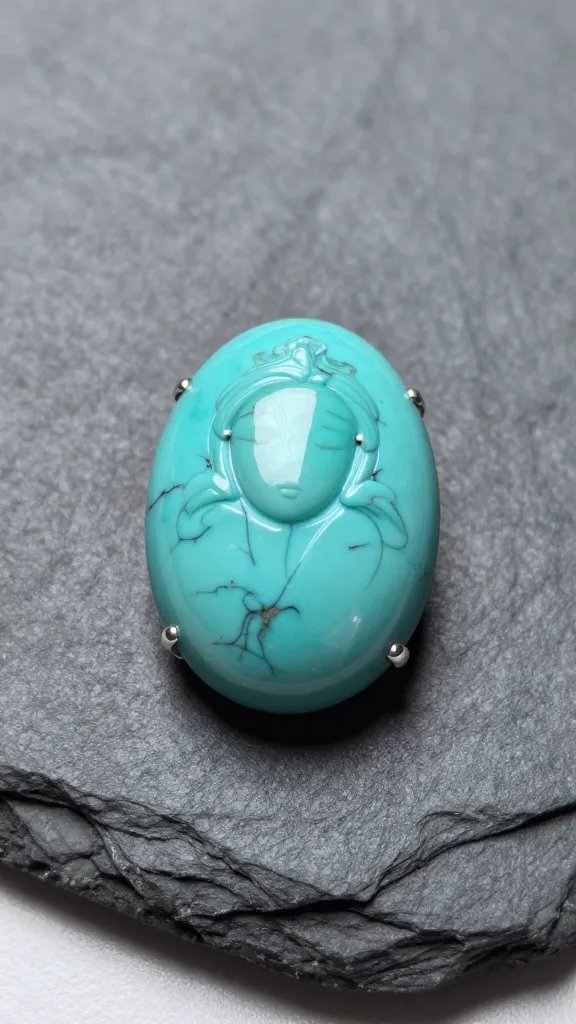
Too many big pieces at once. One lead singer, the rest backup. A large cuff wants studs. A big pendant wants a bare wrist.
Buying scale without trying with a brim or collar. If you wear hats or starched collars, test earring length and pendant drop against them. Bumping and tangling gets old by noon.
Ignoring daily life. If you saddle horses, garden, or type all day, tall rings and high-prong settings will snag, chip, or just annoy you. Choose low profiles for real life and save the showpieces for evenings.
Storing it loose. Stones scratching stones turns heirlooms into “maybe” pieces. Give every item a soft pocket or its own slot.
Letting sunscreen meet the stone. Put jewelry on after sunscreen is soaked in and hands are washed. Blue-green can go dull and blotchy; that’s hard to reverse.
Buying reconstituted or block stone thinking it’s real. If the price seems too good to be true, it is. A small pack of authentic turquoise cabochons costs upward of $150 from a real dealer. A $12 “turquoise” bracelet is something else entirely.
How Do You Tell Real Turquoise From Imitation Without a Lab?
Real turquoise has a waxy surface, feels dense for its size, shows gentle color variation, and has a tight bezel with no glue seep — fakes feel gritty, look too perfectly uniform, and may stain when tested with acetone. No single test is foolproof, but a combination of these checks will catch most fakes.
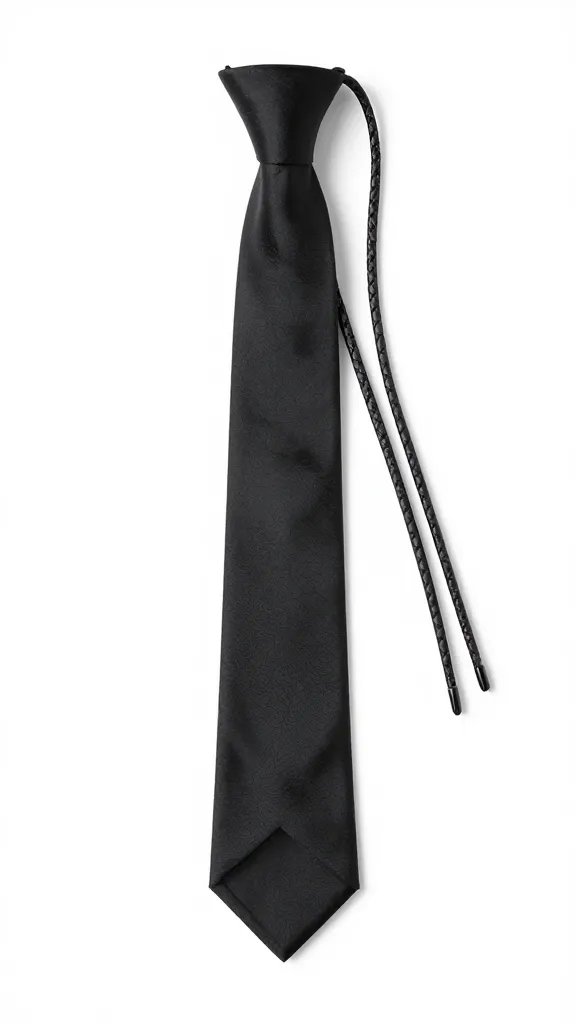
Look at the bezel: it should fit tight around the stone with no glue seep. Check the back: even if it’s open, edges should be finished, not sharp. Silver should be stamped for metal content. Weight should feel present but not clunky for its size.
Color uniformity alone does not prove quality. Some of the best stones have gentle variation. Real turquoise is rarely a bright, uniform blue — it’s usually more greenish blue or pale blue. If the color looks too saturated or too perfect, be suspicious.
A few at-home checks:
- Scratch test: On the underside where it won’t show, gently try to scratch the stone with a pin. Turquoise is soft but harder than howlite. If it flakes or scratches too easily, it’s likely imitation.
- Acetone test: Rub a cotton swab with a drop of acetone on an inconspicuous spot. If color comes off on the swab, the stone is dyed — either fake or color-enhanced.
- Temperature test: Real turquoise feels cool to the touch initially; plastic imitations feel warm almost immediately.
What you want is cohesion: stone, bezel, and band finishing at the same level. Run a finger over the surface — if your nail catches on a lip, that setting may loosen with wear. I once brought a pendant home that scratched every knit I owned; back it went, lesson kept.
How Do You Build a Lean, Lasting Turquoise Kit?
Start with five pieces — a pendant, a cuff, studs, a bead strand, and a stacking ring — and buy them one at a time over several months, pausing to learn what you actually reach for. This slow approach saves money and prevents the “two big pieces fighting each other” problem.
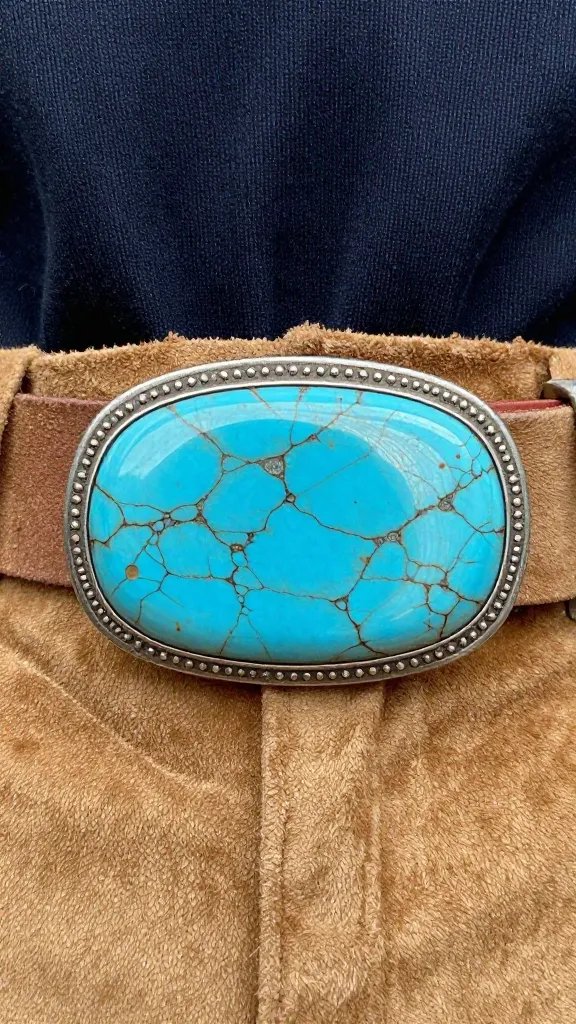
- One pendant, mid-blue cabochon, silver — everyday to dressy; chain that can switch between 18 and 22 inches.
- One cuff, medium width — wear alone; smooth edges so it won’t catch on sweaters.
- Stud earrings — round or oval, 6–8 mm stones; safe for hats and winter scarves.
- Heishi or small bead strand — layers under blouses; travel-friendly.
- Stacking ring — low profile for chores and typing.
Buy in this order and pause after each to live with it a month. I learned to wait when I bought two big pieces back to back and realized they fought each other. Start small, then let your real days tell you what you reach for. If you’re also considering the turquoise earrings guide, studs are the right second purchase after a pendant — they work with everything from feed-store denim to a wedding dress.
My One Firm Opinion — Buy Real Once, Buy Small
Don’t buy cheap turquoise jewelry twice; buy good ones once, even if that means starting with a single pendant and studs. A real stabilized Kingman pendant on a silver chain will outlast ten tourist-shop bracelets and cost less in the long run. The stone will age with you, picking up the small color shifts that come from years of wearing something you chose carefully. That’s worth more than a drawer full of plastic imitations.
Frequently Asked Questions
Can turquoise jewelry turn my skin green?
Natural turquoise can cause a slight green tint on skin if the stone is porous and your skin is acidic, though this is more common with copper jewelry than with set stones. Stabilized turquoise largely eliminates this issue because the resin seals the surface.
How do I know if a turquoise ring is real or fake?
Check for a stamped silver hallmark, look for gentle color variation rather than uniform brightness, and try the acetone test on an inconspicuous spot — if color rubs off, the stone is dyed. Real turquoise has a smooth, waxy surface and feels dense for its size, while imitations often feel light or gritty.
Is turquoise too casual for office wear?
Small turquoise studs, a thin bead strand, or a coin-size pendant read warm and professional alongside a blazer or cardigan in navy, camel, or charcoal. Keep the stones modest in size and let your shoes be quiet.
Why did my turquoise ring turn green over time?
The stone absorbed skin oils, lotions, or sunscreen through its natural pores, which gradually shifts the color from blue toward green. This is permanent — GIA confirms that porous turquoise darkens as it absorbs oils — which is why prevention (wiping after wear, applying lotion before jewelry) is the only reliable strategy.
What’s the best turquoise for everyday wear?
Stabilized turquoise holds up best for daily wear because the resin treatment hardens the stone and locks in color. A medium-width cuff or a cabochon pendant in stabilized Kingman or Sleeping Beauty gives you the most durability without sacrificing beauty.
How do I style turquoise for a rodeo or outdoor event?
Pick one lead piece — a cuff or a pendant — then add studs and skip anything that swings past your jawline. Rodeo seating, hats, and dust call for secure pieces and simple lines, and a low-profile stacking ring won’t catch on anything.
Set It Out the Night Before
Lay tomorrow’s shirt and jeans on a chair and place one piece of turquoise on top — pendant or cuff, not both. See how it looks in your bathroom mirror and in a window; good pieces pass both tests. Then pour a glass of water, set your polishing cloth in the dish by the door, and rest easy knowing you’ll walk out ready for sun, dust, church pews, and dance floors.
Questions you didn’t see answered here? Ask me in the comments — I’ve likely tried it, or I’ll go try it for you. — love, Dottie Rae


3 Comments