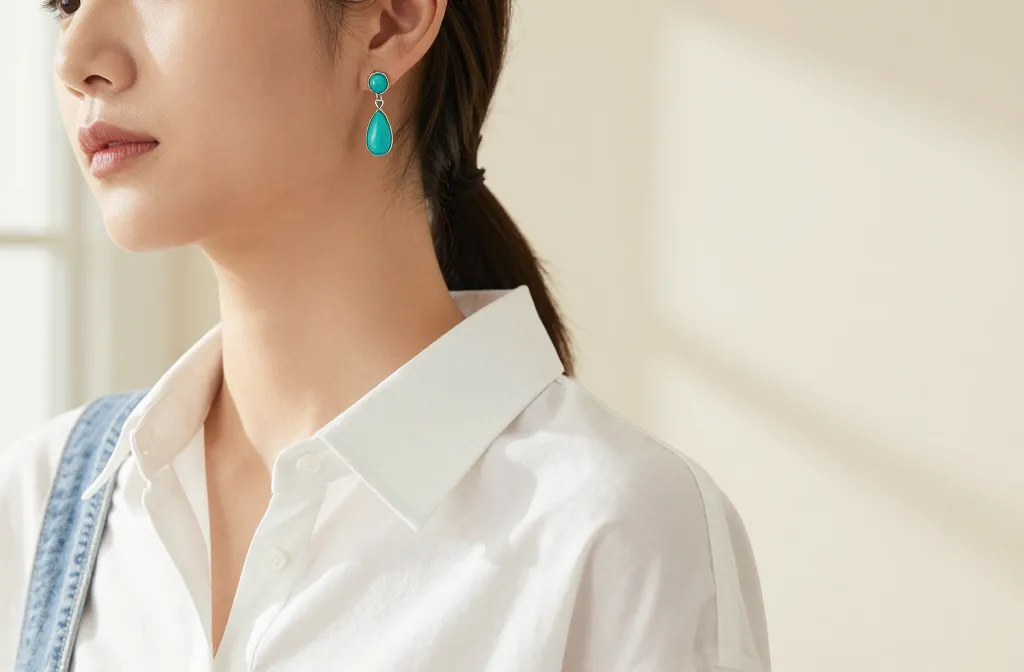
Turquoise Earrings Guide — How to Style Yours
Turquoise earrings wake up a simple outfit the way a clear August sky lifts a long afternoon on the ranch. I’ve worn the same pair of oval studs from a gravel church lot to a dance hall floor, and they always read right — never fussy, never lost. By the end of this guide, you’ll know exactly which earring shapes suit your face and neckline, how to match metals and stones without things getting busy, and what to wear them with from morning errands to barn weddings. You’ll also learn what actually lasts and what to skip, so your favorite pair doesn’t end its life tangled in the back of a drawer.
Quick housekeeping: Some of these links pay the blog a little commission. It doesn’t change the price, and it’s never why something made the cut.
What Makes Turquoise Earrings Work for Everyday Wear?
Turquoise earrings pair effortlessly with denim, white shirts, and natural fibers because the stone’s blue-green hue adds calm color without competing with your outfit. Small studs and short drops keep things simple for daily wear, while larger styles do the talking for evenings out.
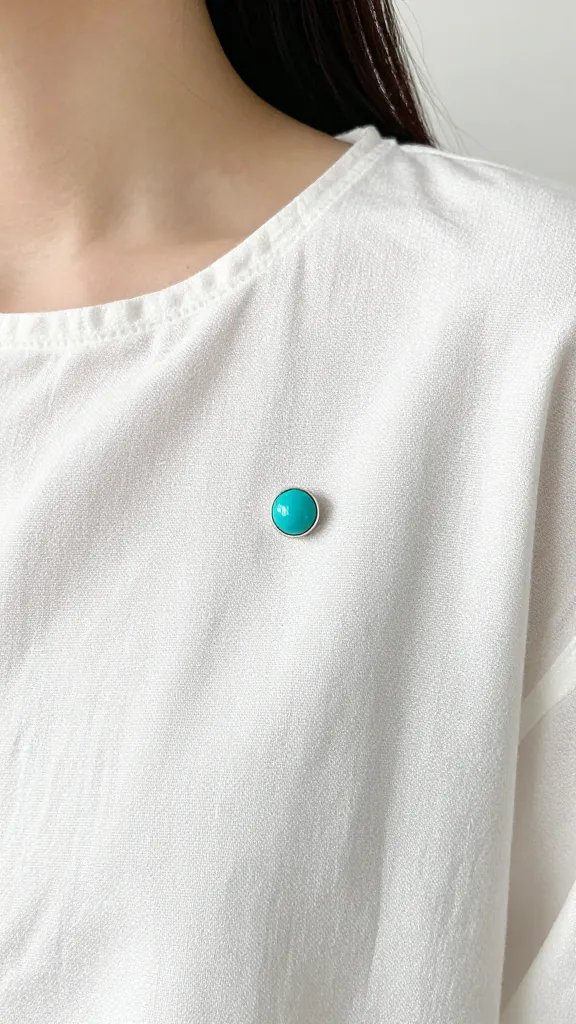
Turquoise has presence — color with calm. It pairs cleanly with denim, white shirts, black knits, and natural fibers because the stone’s cool blue-green reads as both grounded and bright. The trick is scale and setting. Small studs behave like punctuation; larger drops and hoops carry the conversation. I learned this the hard way years ago, trying to pair wide chandelier drops with a ruffled blouse before a dance — too much going on at one neckline, and I spent the whole evening adjusting instead of enjoying. Keep one star and let the rest of the outfit support it.
Turquoise has been a cornerstone of Western and Southwestern jewelry for generations, valued by Navajo, Zuni, and Hopi silversmiths long before it became a fashion trend. That heritage gives the stone a depth that no trend cycle can touch — when you wear turquoise, you’re wearing something with roots.
Which Turquoise Earring Style Suits Your Face Shape?
Round faces look longest in vertical drops and angular shapes; square faces soften with curved hoops and teardrops; oval faces can wear nearly anything. Match the earring silhouette to the shape you want to create, not just the shape you have.
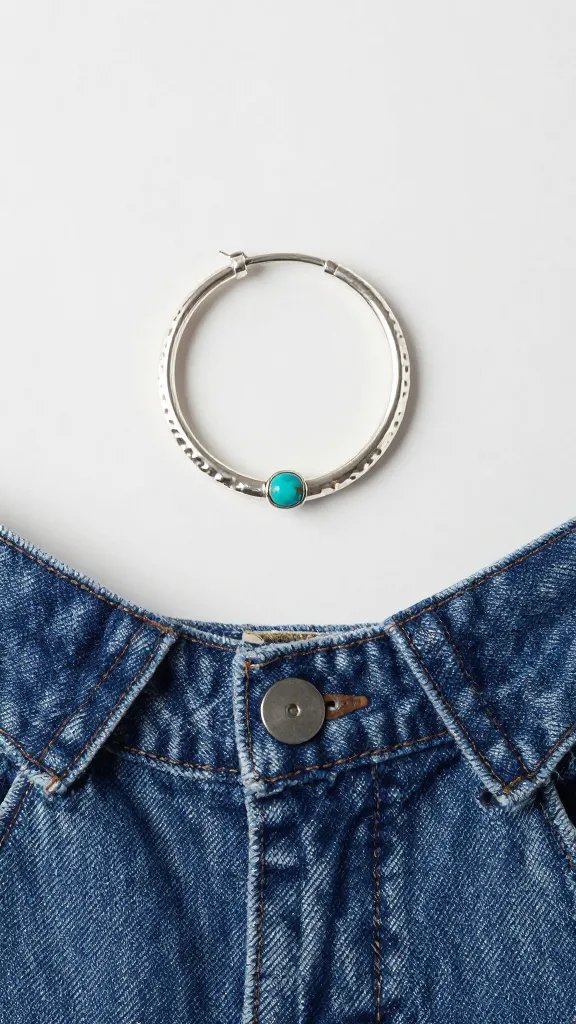
Start with shape, both yours and the stone’s. Studs serve daily life: meetings, errands, travel. Drops soften a button-down or frame a simple dress. Hoops with turquoise carry western spirit without shouting. If you like bolder, cluster or petal arrangements sit nicely above a crewneck; save shoulder-grazing lengths for evening.
On the stone, look for stable color and secure bezel or prong settings, according to Angara’s turquoise buying guide. Matrix — the dark webbing inside the stone — is a matter of taste: heavy matrix reads rustic, smooth stones read modern. I keep one of each so I can swing either way depending on what I’m wearing.
| Face Shape | Best Turquoise Earring Styles | Styles to Approach Carefully |
|---|---|---|
| Round | Long drops, elongated danglers, angular geometric shapes | Large round hoops, wide button studs |
| Square | Oval drops, curved hoops, teardrop shapes | Square studs, boxy angular designs |
| Oval | Nearly everything — studs, hoops, drops, chandeliers | Very long earrings that exaggerate length |
| Heart | Teardrops, wider-bottom chandeliers, rounded drops | Top-heavy designs, large statement studs at the lobe |
| Diamond | Studs, medium hoops, soft drop styles with curves | Very wide or sharp geometric shapes |
This guide aligns with the face-shape principles from Keeta Luxury and F. Silverman Jewelers’ earring guide — the idea is always to create balance, not mirror the angles you already have.
What Should You Know About Stone Quality Before You Buy?
Natural turquoise is porous and gradually deepens in color with wear; stabilized turquoise is treated to be harder and more color-fast. Ask the seller which type you’re getting — the answer changes how you care for them.
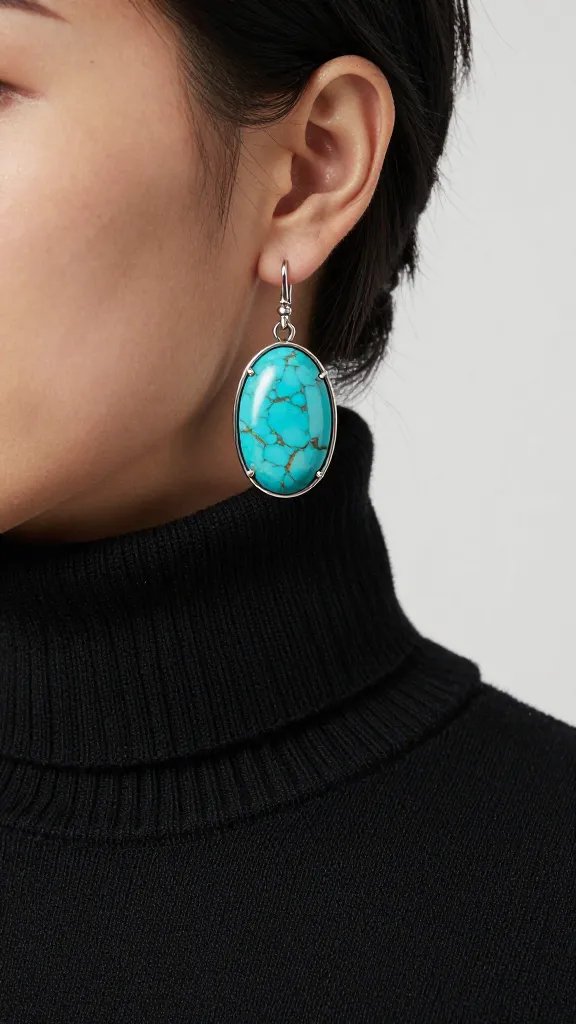
Here’s something most styling guides skip: not all turquoise earrings start with the same stone. Natural turquoise is soft and porous — it absorbs skin oils over time and gradually deepens in color, which many people love as a personal patina. Stabilized turquoise is treated with a clear resin that fills those tiny pores, making the stone harder and more resistant to color change. Neither is better — they’re just different. If you like a stone that evolves with you, go natural. If you want the color you bought to stay put, go stabilized.
The best turquoise used in Western jewelry comes from mines across the American Southwest — Sleeping Beauty, King Mountain, and Number Eight are among the most respected sources. Each mine produces slightly different color, from robin’s-egg blue to deep green-blue, and the matrix patterns vary like fingerprints. Knowing where your stone came from isn’t just trivia — it helps you understand what you’re wearing.
One more thing most guides don’t mention: traditional Native American setters often place a bed of sawdust beneath the stone inside the bezel as a cushion. It’s a time-honored practice, but it means you should keep your earrings away from water — moisture swells the sawdust and can push the stone loose over time.
How Do You Match Metals and Other Jewelry Without Overdoing It?
Pick one statement piece and let everything else play support — if turquoise earrings are the color, keep necklaces minimal or skip them entirely. Sterling silver makes turquoise read crisp and cool; yellow or rose gold warms it up for dressier occasions.
Pick a lane and stay there. If the earrings are the color, keep the necklace small or skip it. A thin chain with a tiny pendant or no necklace at all leaves room for the earrings to breathe. Bracelets are safer: a plain cuff or a leather wrap won’t argue with turquoise near your face.
For metal choice, sterling silver is the classic pairing — it makes the blue-green read clean and bright. If your skin runs warm, yellow or rose gold lifts the stone and gives it a dressier feel. If your skin runs cool, sterling keeps it fresh. Match your watch or belt buckle if you want cohesion; mixing metals is fine as long as the designs stay simple.
I once wore turquoise hoops with a chunky turquoise necklace to a rehearsal dinner and spent half the night untangling them — and untangling myself from photos where everything competed. Lesson learned: the eye needs one place to land. If you want to explore stacking turquoise across multiple pieces, the turquoise jewelry layering guide walks through exactly how to do it without crossing the line.
What Necklines and Hairstyles Pair Best with Turquoise Earrings?
Studs work with collared shirts and crewnecks; medium drops flatter V-necks and square necklines; save larger clusters for strapless or scoop necks where they won’t compete with fabric. With hair down, go up a size so earrings don’t disappear; with an updo or hat, smaller styles still show.
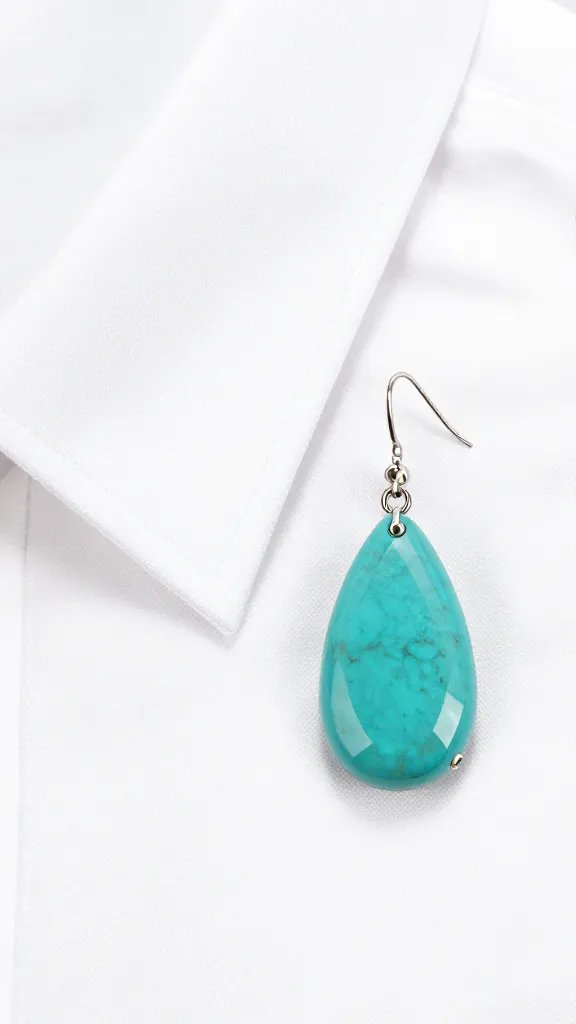
Turquoise studs with collared shirts and crewnecks are foolproof. Medium drops flatter a V-neck or squared neckline by echoing the shape without repeating it. Save larger clusters for strapless or scoop neck where the earrings don’t fight fabric for attention.
Hair matters as much as the neckline. If your hair is down and shoulder-length or longer, go up a size so the earrings don’t vanish behind it; with a bun, French braid, or hat, you can wear smaller and still be seen. I keep a pair of oval studs in the truck console for days a hat’s involved — they never catch on the crown, and I can find them without looking.
| Occasion | Best Earring Style | Ideal Neckline | Hair Suggestion |
|---|---|---|---|
| Office / Workday | Small smooth studs or short drops | Crewneck, collared blouse | Neat bun or shoulder-length down |
| Casual Weekend | Hoops with turquoise detail | V-neck tee, chambray shirt | Loose braid, bandana, or hat |
| Barn Wedding (Day) | Medium drops or lever-backs | Scoop neck, linen dress | Updo or swept-back style |
| Evening / City Venue | Sleek studs or metal-forward drops | Strapless, silk shell | Chignon or polished waves |
| Rodeo / Fair | Secure-back studs or lever-back drops | Button-down, denim jacket | Hat-friendly studs or short drops |
How Do You Wear Turquoise Earrings to Work Without Looking Casual?
Choose small studs or short oval drops in smooth stones set in simple metal — they read as intentional color, not costume. Pair with a pressed white blouse and structured blazer, and keep any other turquoise on your hands to one ring.
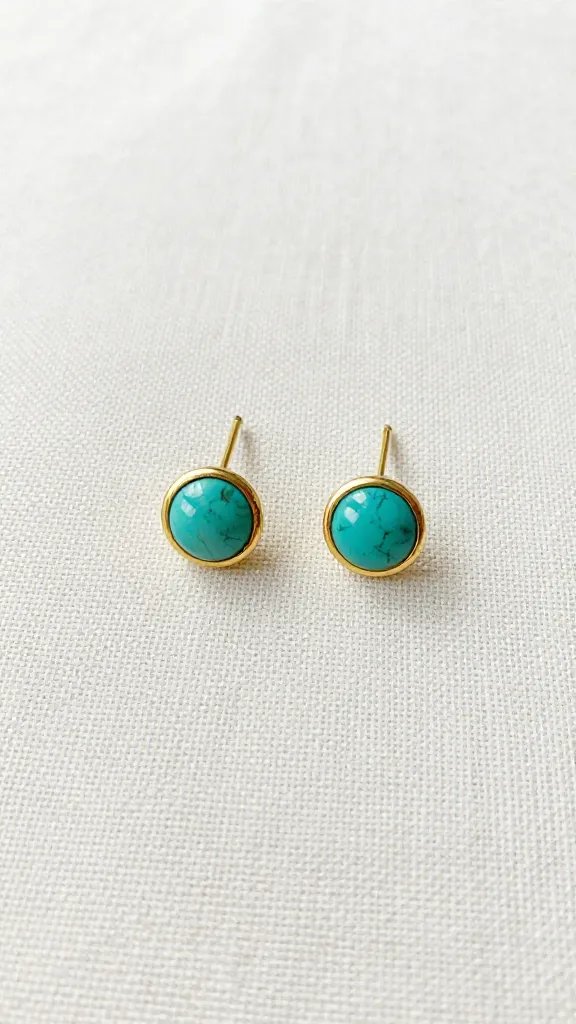
Office air runs cold and fluorescent; keep your lines clean. Choose small studs or short oval drops in smooth stones, set in simple metal. Pair with a pressed white blouse, a denim or twill blazer, and leather flats or boots. Keep any other turquoise on your hands minimal — one ring is enough.
If a client meeting calls for dark neutrals, turquoise is the friendly color note that doesn’t read casual. The key is choosing stones with minimal matrix and a polished finish — they look deliberate rather than rustic. For more ideas on building a western jewelry wardrobe that moves from desk to dinner, the western rings guide covers pieces that share the same quiet spirit.
What Turquoise Earrings Hold Up at Rodeos, Fairs, and Long Weekends?
Look for stud backs with locking clutches or lever-back drops — both stay secure through dust, wind, and crowded dance floors. Avoid hook-style closures without safety stops; they work loose faster than you’d think.
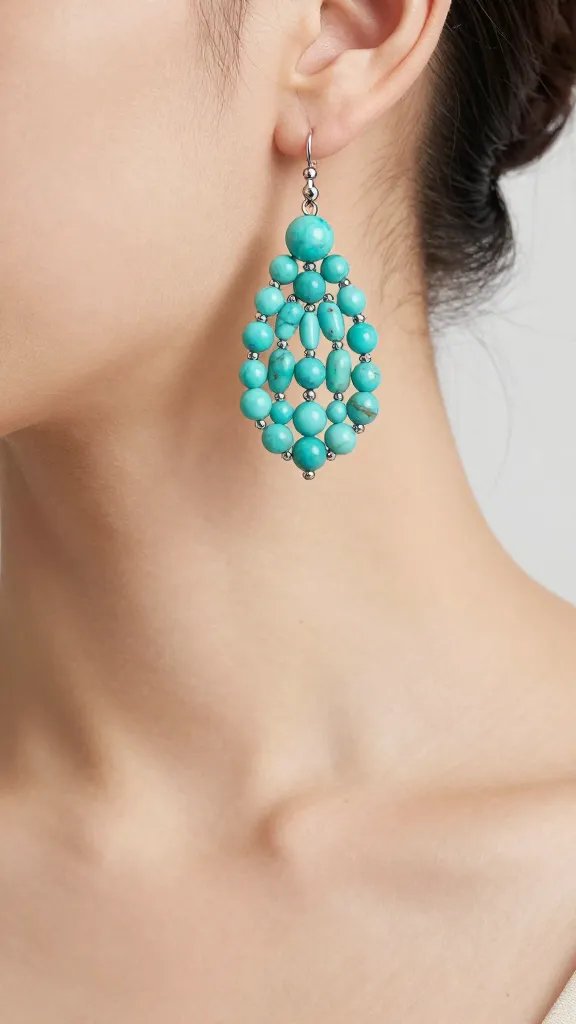
For rides, fairs, and long hot Saturdays, you want secure closures and shapes that won’t snag. Look for stud backs with locking clutches or lever-back drops. Wear them with a chambray shirt, straight-leg jeans, and boots you can walk in.
I wore lever-back turquoise drops through a full day at the county fair — rodeo in the afternoon, live music at dusk. No snags in my bandana, and they still looked bright by sundown after a quick wipe with a cotton corner of my apron. The lever-back closure is the one detail I won’t compromise on for active days; it locks behind the ear and doesn’t swing free the way French hooks do.
How Should You Style Turquoise Earrings for a Wedding?
Choose medium drops or refined studs, skip the necklace, and let the earrings be the color note against linen, silk, or smooth cotton. For evening or city venues, go sleek — metal-forward drops with subtle turquoise accents keep things polished.
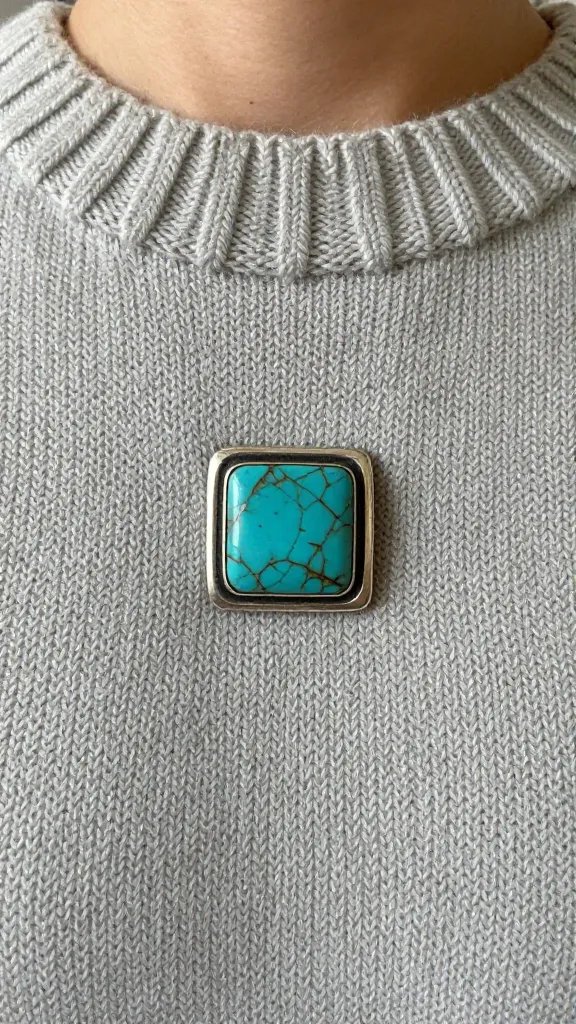
Turquoise sings at outdoor ceremonies and barn receptions. For daytime, pair medium drops with a linen or cotton dress in soft florals or solid pastels; keep the necklace off entirely. For evening or city venues, choose sleek studs or metal-forward drops with subtle turquoise accents.
If you’re wearing a suit, a silk shell plus turquoise studs and a narrow belt reads finished and confident. Thirty years of barn weddings taught me one thing above all else: earrings that don’t swing into your champagne glass on the dance floor are the right length. Test the swing before you leave the house — a quick turn of the head in the mirror tells you everything.
Turquoise remains a popular wedding accessory symbolizing protection, love, and prosperity in Native American tradition, which makes it a meaningful choice for brides and guests alike. If you’re planning a full western wedding look, the cowgirl hats guide covers how to balance headwear with earrings so neither gets lost.
What Colors and Fabrics Bring Out the Best in Turquoise?
Turquoise pairs naturally with denim, white, black, camel, olive, rust, and cream — earth tones and clean neutrals let the stone’s color do the work. Natural fibers like cotton, linen, wool, and silk keep the look grounded; shiny synthetics can fight the stone’s matte glow.
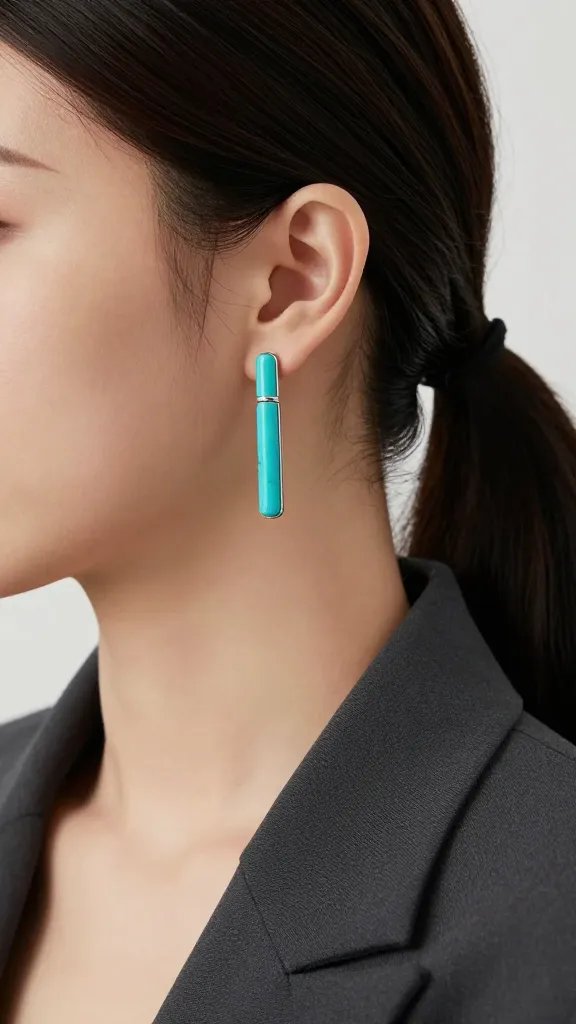
Turquoise loves denim, white, black, camel, olive, rust, and cream. It also plays well with coral and soft pink in summer, and with charcoal and heather gray in winter. Natural fibers — cotton, linen, wool, and silk — keep it grounded; the stone’s matte finish harmonizes with fabric that has its own quiet texture.
Shiny synthetics near the face can fight the stone’s gentle glow. If you wear satin, go with smooth, minimal settings so the textures don’t argue. I once paired bright turquoise studs with a navy wool dress at a December wedding — looked festive without a hint of holiday sweater, and the combination photographs beautifully in candlelight.
How Do You Make Room for Earrings When You Wear Hats and Glasses?
With a felt or straw hat, studs or short drops keep you from catching the brim when you tip it back. With eyeglasses, mind the gap between frame and earring — hoops wider than your frames can look crowded and feel tangled.
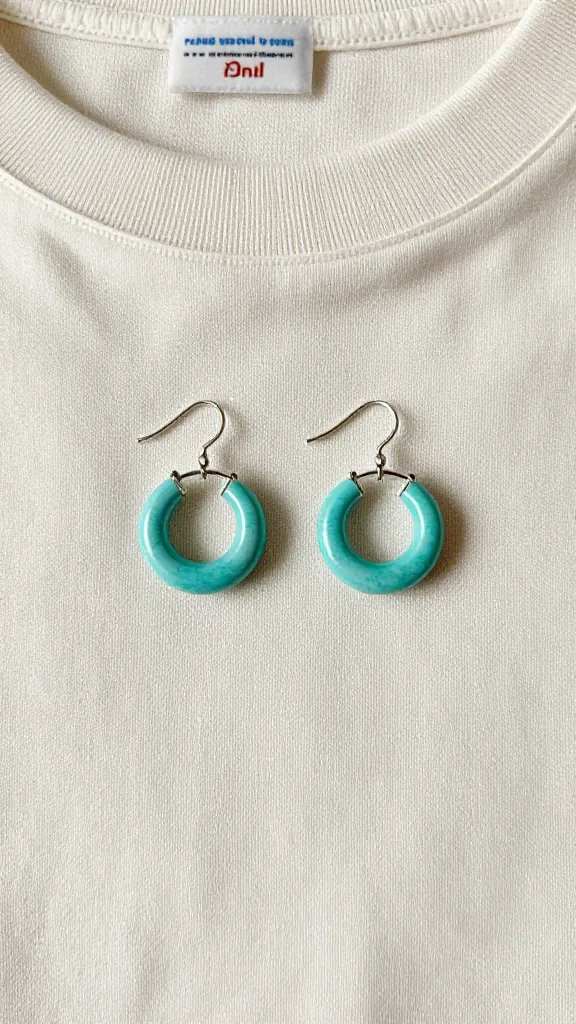
With a felt hat or straw hat, studs or short drops keep you from catching the brim when you tip it back — a practical detail that matters more after the third time you knock a pair loose in the parking lot. With eyeglasses, mind the space between frame and earring; hoops wider than your frames can look crowded and occasionally catch when you push them up.
If you’re in and out of a neck gaiter or scarf throughout the day, choose closed-back styles so you don’t pull a backing loose when you adjust it. I lost a backing in a pasture once and spent twenty minutes on my hands and knees in the grass — never again. Now I keep spare clutches in my wallet, and I choose lever-backs for any day that might involve bending, riding, or wrestling with a stubborn gate.
How Can You Tell If a Pair of Turquoise Earrings Will Last?
Turn them over and check for smooth solder points, solid posts, and snug closures — these are the details that keep earrings on your ears and out of the dirt. Turquoise ranks 5–6 on the Mohs hardness scale, so stones should sit tight with no rattle when you tap them gently.
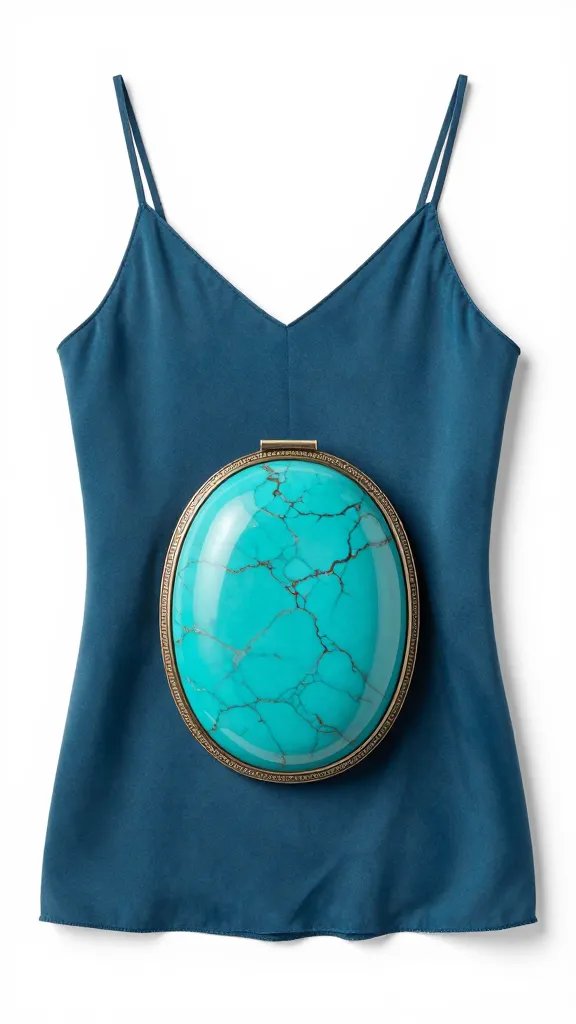
Turn them over. Smooth solder points, solid posts, and snug closures are what keep earrings on your ears and out of the dirt. Stones should sit tight in their settings — no rattle when you tap them gently. According to the GIA’s turquoise care guide, the stone ranks 5 to 6 on the Mohs hardness scale, which means it’s significantly softer than sapphires or diamonds and can scratch if tossed loose in a jewelry box.
Weight matters more than most guides mention. If a single earring tugs your lobe downward after an hour, try a smaller pair or use stabilizing backs — the silicone discs that spread pressure across a wider area. Comfort directly determines whether a pair gets worn or abandoned, and heavier drop styles with multiple stones can add up faster than you’d expect. Test them for five minutes before you commit to a full day.
Three Reliable Outfit Formulas with Turquoise Earrings
One pair of turquoise earrings can anchor three completely different looks — from morning errands to a night out — when you build the rest of the outfit around simple, well-fitting basics.
Errands and Coffee
White tee, denim jacket, straight jeans, ankle boots, oval turquoise studs, and a leather tote. Add a bandana if it’s windy; keep everything else in the background.
Workday to Dinner
Black knit dress, belt, low-heel boots, small drop turquoise earrings, thin bangle. Toss on a blazer for the office, lose it for dinner. The earrings carry both looks without a change.
Rodeo Night
Chambray shirt tucked into dark bootcut jeans, statement buckle, turquoise hoops with secure clasps, and a felt hat. A single silver cuff is plenty — the hat and collar frame the earrings so nothing else needs to compete.
For more ideas on building a western jewelry rotation, the turquoise jewelry guide covers the full range of pieces worth owning.
How Do You Clean and Store Turquoise Earrings Without Damaging Them?
Wipe turquoise earrings with a soft, dry cotton cloth after each wear — this removes skin oils before they can soak into the stone. Never use ultrasonic cleaners, steam, or harsh chemicals; turquoise is porous and can discolor permanently.
Turquoise is porous — that’s the single most important fact about caring for it. Keep earrings away from perfumes, hairspray, and lotions by putting them on last and taking them off first. The care experts at Garland’s recommend a quick daily wipe with a soft cotton cloth to prevent oil buildup, and a slightly damp cloth for monthly cleaning — but never soak them, and dry immediately.
Store each pair separately in a soft pouch or a lined box so metal doesn’t scratch stone. I’ve left a pair loose in my purse before and came home to the silver post scratching a visible line across the cabochon — don’t be me. Keep them away from direct sunlight for long stretches, and if you live somewhere humid, a silica gel packet in the pouch helps.
What Turquoise Earrings Should You Skip?
Avoid flimsy hook closures without safety stops — they work loose during a long day. Skip lacquered imitations that chip to white underneath. And skip over-embellished pairs that add tassels, chains, and too many stones; they tangle, and you’ll baby them instead of wearing them.
My one firm opinion: don’t buy cheap earrings twice. Buy good ones once and wear them hard. A well-set pair of sterling silver turquoise studs, worn every week for five years, costs less per wearing than three trendy pairs that lose their backs and end up in a drawer. The LomaSiiva buying guide has a solid breakdown of what to look for in craftsmanship and pricing.
How Many Pairs of Turquoise Earrings Do You Actually Need?
Three pairs cover nearly every situation: small studs for daily wear, medium drops for dressy occasions, and hoops with turquoise detail for casual weekends. Add a fourth only if you attend formal evenings — a sleek, metal-forward pair with modest turquoise accents rounds things out.
- Small oval or round studs — daily wear, travel, office.
- Medium drops or lever-backs — weddings, church, dinner out.
- Hoops with turquoise detail — rodeo, concerts, weekends.
I own four pairs, and every single one earns its place. The key is buying each for a job the others can’t do — if two pairs overlap in function, one of them will gather dust. For a deeper look at building a turquoise collection that works as hard as you do, the turquoise jewelry guide covers necklaces, bracelets, and rings that play well with these earring staples.
Frequently Asked Questions
How do you style turquoise earrings for a wedding?
Choose medium drops or refined studs in a smooth stone, keep necklaces off, and let the earrings be the color note against linen, silk, or a soft cotton dress. For outdoor barn venues, stick with lever-back closures so they don’t swing loose on the dance floor.
Can you wear turquoise earrings with other gemstones?
Yes, as long as one stone leads and the rest support — turquoise pairs naturally with coral, mother-of-pearl, and onyx. Keep shapes simple and finish with plain metal so the combination reads as intentional rather than scattered.
What metals work best with turquoise earrings?
Sterling silver is the classic Western pairing and makes the blue-green read clean and bright; yellow or rose gold warms the stone for a dressier feel. Match your watch, belt buckle, or ring if you want cohesion, though simple designs can mix metals without looking careless.
How do I clean turquoise earrings without damaging the stone?
Wipe gently with a soft, dry cotton cloth after wearing to remove oils, and use a slightly damp cloth for deeper cleaning — but never soak turquoise or use ultrasonic cleaners. The stone is porous and can absorb liquids that cause permanent discoloration, according to the GIA.
Are turquoise earrings appropriate for professional or office settings?
Yes — choose small studs or short, smooth drops with minimal matrix and simple metal settings so the color reads intentional rather than casual. Pair with structured pieces like a blazer or tailored dress, and keep other turquoise jewelry to one ring or a thin bracelet.
What turquoise earring styles work best for different face shapes?
Round faces look longest in vertical drops and angular shapes; square faces soften with curved hoops and teardrops; oval faces can wear nearly any style. Heart-shaped faces benefit from teardrops or earrings with visual weight at the bottom to balance a narrower chin.
Choose One Pair Tonight, Wear It Tomorrow
Lay out tomorrow’s outfit — a pressed shirt, jeans that fit, boots you trust — and set one pair of turquoise earrings on top. If they argue with the neckline, switch to studs. One thoughtful choice is all it takes to look like yourself, only brighter.
If this guide helped you think differently about your turquoise, the turquoise jewelry guide and turquoise layering guide go well with it. For the western ring pieces that share the same spirit, the western rings guide is worth a look too.
Questions about a specific pair or outfit? Ask away in the comments — love, Dottie Rae



One Comment