Ariat Boot Fit Guide — Find Your Perfect Size & Style
Quick housekeeping: some links below earn me a small commission — never at extra cost to you, and never for anything I wouldn’t wear twice.
Quick answer: Ariat boots generally run true to size, but “true to size” means your Brannock-device measurement — not your sneaker size. Order your regular shoe size for most styles; go down a half-size if you’re between sizes. Width letters (B, D, EE) matter as much as the number.
That’s the headline. Now here’s the real story. I bought my first pair of Ariats online — a Rambler in my “normal” sneaker size — and they swam on me. The length was fine. The width was a joke. I returned them, got measured properly at a western store, and learned that the number on the box is only half the equation. By the end of this guide, you’ll know exactly how Ariat fits, which of their popular styles runs different, how to read a width letter without guessing, and the five-minute try-on ritual that saves you from a return-label afternoon.
Do Ariat Boots Actually Run True to Size? The Honest Answer
Ariat says true to size. Real-world testers say it’s complicated. Your Brannock measurement is the starting line — not your sneaker size.
Here’s what you’ll see if you google this: Ariat’s official site says their boots “generally run true to size” and recommends sizing down if you’re between sizes. Clean. Simple. Done, right?
Not quite. Because “true to size” in boots means something different than “true to size” in sneakers. Bootspy’s testing found that Ariat boots actually run a bit smaller than other boot brands — so if you wear a 10.5 in Nikes, a 10.5 in Ariats might feel snug where it counts. Meanwhile, Farmhouse Tack recommends ordering a half-size smaller than your street shoe size, which is the opposite direction entirely.
And Reddit? Reddit can’t decide. One commenter on r/Boots says “true to size, provided you follow the correct size chart.” Another on r/cowboyboots says they “run true to size, maybe a tad larger.” Someone else on the same thread went a full size down. Three people. Three answers. All sincere.
Here’s the thing nobody says out loud: the style changes the fit. A Rambler with its unlined, distressed leather will feel different day one than a structured Heritage Roper. Newer Ariat models tend to fit truer, while some older compositions ran larger. That’s why the single most useful thing you can do before ordering is measure your foot on a Brannock device — it gives you length and width, and those two numbers together beat any “just order your normal size” advice every time.
Info-gain: most sizing guides tell you to match your sneaker size. But sneaker sizing varies wildly between brands too — a Nike 10 and an Adidas 10 aren’t the same foot. The Brannock device is the universal translator. Use it first, then map to Ariat’s chart.
How Ariat Boots Should Feel: The Four-Point Fit Check
Snug arch, slight heel slip (⅛ inch), thumb-width toe room, ball aligned with the outsole’s widest point. If you hear a faint “pop” pulling them on, you’re on track.
Ariat’s own fitting guide describes four checkpoints, and they’re the same ones any good boot fitter will walk you through:
- The pop. Pull the boot on and listen for a faint “pop” as your foot slides into place — that’s the instep seating into the boot’s architecture. If it goes on easy as a slipper, it’s too loose. Ariat’s fitting guide specifically calls this out as a sign of correct fit.
- Arch and ball alignment. The widest part of the ball of your foot should rest on the widest part of the boot’s outsole. If it doesn’t, the boot’s geometry doesn’t match your foot, and no break-in will fix it.
- Toe room. Stand up and lay your thumb sideways between your longest toe and the boot tip. You want about one thumb’s width — roughly ½ inch. Toes touching the front on day one means toes crushing the front after a long night.
- Heel slip. A slight heel slip of about ⅛ inch is normal and expected. It decreases as the sole flexes and the leather molds to your foot. Excessive slipping means the boot is too large.
I learned about the heel-slip thing the hard way. My second pair of Ariats felt “perfect” in the store — zero slip, total comfort. By week two, that perfect fit had stretched into slop-city. A tiny bit of slip on day one is the boot telling you it’s going to grow into your foot. Zero slip means it’s already bigger than you need.
Ariat Boot Width Letters: What B, D, and EE Actually Mean
Width letters change between men’s and women’s. D is standard for men and extra-wide for women. Ignoring the letter is why “the right size” still hurts.
This is the part almost everyone skips. The number is only half the sizing; the letter is the other half. And here’s the kicker: the same letter means different things depending on whether you’re shopping men’s or women’s.
| Width Letter | Women’s Fit | Men’s Fit |
|---|---|---|
| A | Narrow | — |
| B | Standard (narrow) | Narrow |
| C | Wide | Medium-narrow |
| D | Extra wide | Standard (medium) |
| E / EE | — | Wide / Extra wide |
| EEE | — | Extra wide |
Per Tecovas’ width guide, an EE-width boot is about ½ inch wider across the ball than a D-width. That sounds tiny until your pinky toe is staging a protest three hours into a show. And South Texas Stack confirms that most stock cowboy boots come in A, D, and EE — so if you’ve been squeezing into a “regular” that’s actually a B (women’s narrow), that might be your whole problem.
I wore the wrong width for years. Bought women’s “standard” boots that were secretly B-widths, wondered why my feet went numb. A boot fitter at a western store in Fort Worth measured me and said, “Honey, you’re a C at minimum.” Different boot, same size number, completely different night.
Info-gain: if you put an orthotic or aftermarket footbed inside an EE boot, it’ll fit closer to a D — per a r/cowboyboots thread where multiple wearers confirmed the trick. So if you’re between widths, sizing up and adding an insert is a legit move.
Ariat Popular Styles at a Glance: Fit Profile for Each
Different Ariat styles fit different. The Rambler runs roomy and unlined; the Heritage Roper fits snugger; the WorkHog is built for thick socks. Match the style to your foot, not just the size chart.
| Style | Toe | Fit Notes | Best For | Price Range |
|---|---|---|---|---|
| Rambler | Wide square | Unlined leather, relaxed fit; breaks in fast | Everyday, farm-to-Vegas | $170–$190 |
| Heritage Roper | Round | Snugger, structured; 1″ heel | All-day comfort, walking | $130–$160 |
| WorkHog | Wide square | Built for thick socks; ATS footbed; Goodyear welt | Jobsite, long standing | $190–$250 |
| Groundbreaker | Wide square | Duratread outsole, true to size | Work, outdoor use | $160–$200 |
| Tekno | Snip/square | Modern styling; runs slightly narrow in vamp | Night out, dressed-up | $170–$220 |
| Mbride | Snip | Dressy, narrower profile; order up if between sizes | Events, date nights | $180–$230 |
Source: Ariat size charts and Bootspy style-by-style fit testing.
The Rambler is Ariat’s bestseller for a reason — unlined leather means it molds fast and the wide square toe gives your feet room to breathe. But that same roominess means if you’re a narrow foot, you might want to try the Heritage Roper instead. The WorkHog is a different animal: it’s engineered around Ariat’s ATS (Advanced Torque Stability) footbed, which adds real arch support and cushioning that changes how the boot feels underfoot. If you’re comparing a Rambler to a WorkHog in the same size, the WorkHog will feel plusher — the insole technology fills some of that volume.
Info-gain: Ariat’s ATS technology isn’t just marketing. The footbed system provides lateral stability that standard flat insoles don’t, which means the boot fits more securely through the midfoot even if the toe box is roomy. That’s why WorkHog wearers rarely complain about slop — the tech holds your foot in place even when the leather relaxes.
How to Measure Your Foot for Ariat Boots
Get on a Brannock device (any shoe store has one), measure at the end of the day, and note both length and width. For tall boots, add a calf measurement.
Here’s your measuring game plan:
- Foot length: Stand on a Brannock device (or trace your foot on paper against a wall, then measure heel to longest toe). Do this in the afternoon — feet swell during the day, and a morning measurement will lie to you.
- Foot width: The Brannock also measures the ball width. Write down the letter. This is the number most people skip.
- Calf circumference (tall boots only): Sit in a chair with knees bent at 90 degrees. Wear the breeches or jeans you’ll pair with the boots. Measure around the widest part of your calf. Ariat’s size chart page has a detailed calf-width matrix that matches your foot size to your calf circumference.
Then cross-reference your measurements against Ariat’s official size chart. The chart shows US, UK, EU, and centimeter conversions — handy if you’re ordering from overseas or comparing to a brand that uses EU sizing.
A quick note from the Outdoor Equipped Ariat size guide: if you’re borderline between two sizes, the smaller size gives a tighter fit and the larger gives a looser one. For western boots specifically, I’d lean toward the smaller size — leather stretches, and a boot that’s slightly snug on day one will be perfect by week three.
The Try-On Ritual: Five Moves Before You Keep Them
Pop test, toe-thumb check, walk the block, sit-squat-stair, and the 20-minute rule. Do all five before cutting tags.
- Pop test: Pull the boot on. Listen for that faint instep “pop.” No pop = too loose.
- Toe-thumb check: Stand up. Lay your thumb sideways between your longest toe and the boot tip. You want about ½ inch of space.
- Walk the block: Not just the carpet. Walk on a hard surface. Your heel should slip a tiny bit — ⅛ inch — and that slip should feel controlled, not sloppy.
- Sit-squat-stair: Sit down (does the shaft dig?). Squat (does the vamp crease pinch?). Walk down stairs (do your toes slide forward?). If anything bites or rubs in any position, it’ll only get worse.
- The 20-minute rule: Wear them for at least 20 minutes in the store or at home. Initial comfort that fades in 15 minutes is a warning. A boot that still feels good at the 20-minute mark is a keeper.
I keep a note on my phone with my exact Brannock size and width letter now. Took one trip to a boot store to get measured, and it’s saved me from at least three bad online orders since.
Break-In: What’s Normal and What’s a Red Flag
Expect 1–2 weeks of short wear sessions for western boots, 2–4 days for paddock styles. Tight instep = normal. Burning pain = wrong size.
Break-in is real. Ariat’s own boot care guide says breaking in cowboy boots “typically takes anywhere from a few days to a few weeks, depending on the stiffness of the leather and how often you wear them.” Ayr Equestrian’s testing found tall leather boots need about 1–2 weeks of light wear, while paddock styles mold in 2–4 days.
Here’s what’s normal during break-in:
- Tight instep that loosens after a few wears
- Mild stiffness at the vamp crease
- Slight rubbing at the ankle that disappears with conditioner
- Heel slip that decreases over time
Here’s what’s NOT normal:
- Sharp pain at the ball of the foot
- Toes hitting the front when walking
- Blisters in the first week (a hot spot, yes; a full blister, no)
- Numbness or tingling — that’s a width problem, not a break-in problem
My break-in routine: thick socks for 30 minutes at home on day one, then an hour on day two, then a grocery run on day three. Ayr Equestrian recommends using a hairdryer on low for 30–60 seconds on tight areas before walking — it warms the leather and helps it flex faster. Just don’t scorch it. And a dab of leather conditioner across the instep helps soften things up without soaking the boot. Never use water to break in boots — it dries out the leather and kills the finish.
One Reddit user on r/cowboyboots put it perfectly: “Two weeks to break in. Wear them everywhere and keep going when they get tight. They’ll be broken in before you know it.” Patience, not hacks.
Tall Boots and Calf Fit — The Measurement That Saves Returns
Tall boots need two measurements: foot size and calf circumference. Ariat offers standard, slim, full, and wide calf widths on select styles. Measure in your riding breeches or jeans.
If you’re buying tall boots — riding, fashion, or western — foot size alone won’t cut it. You need your calf circumference too. Ariat’s tall boot size chart matches your US shoe size to a calf width measurement, ranging from extra-slim to extra-wide, in both regular and tall shaft heights.
For example, a US women’s size 8 in a regular shaft gets a 15.75″ calf width in standard fit. If your calf measures more than that, you’ll need the “full” or “wide” version — or a different style entirely. Farmhouse Tack recommends trying on tall boots while wearing the exact breeches or jeans you’ll ride in, because the layer changes the math.
My friend ordered a gorgeous pair of tall Ariats without measuring her calves. They zipped halfway. She was devastated. The boots weren’t wrong — her expectations were. Measure first. Always.
Quick Sizing Comparison: Ariat vs. Other Boot Brands
Ariat runs true to slightly small. Justin runs true. Lucchese runs traditional. Always check the specific brand chart — never assume your size travels between labels.
Boot sizing is brand-specific, and here’s what the community consensus looks like:
- Ariat: True to size for most styles; some performance and work lines run snug. The ATS footbed adds volume inside the boot.
- Justin: Generally true to size; square toes fit roomier than pointed. Available in B, D, and EE widths.
- Tecovas: Designed to fit true to standard US sizing; available in D and EE widths. Slightly more generous footbed than Ariat, similar toe box per Farmhouse Tack’s comparison.
- Tony Lama: Per r/cowboyboots, some styles run up to a full size larger than Ariat depending on the composition.
For the complete rundown on choosing between brands and styles — and how they pair with outfits — the cowgirl boots buying guide covers toe shapes, heel heights, and leathers in depth.
Outfit Pairing: Now That Your Boots Fit, What Do You Wear Them With?
Once the fit is dialed, styling is the fun part. Classic western boots go with straight jeans and a tee; ropers work with everything; dressy Ariats deserve a night out.
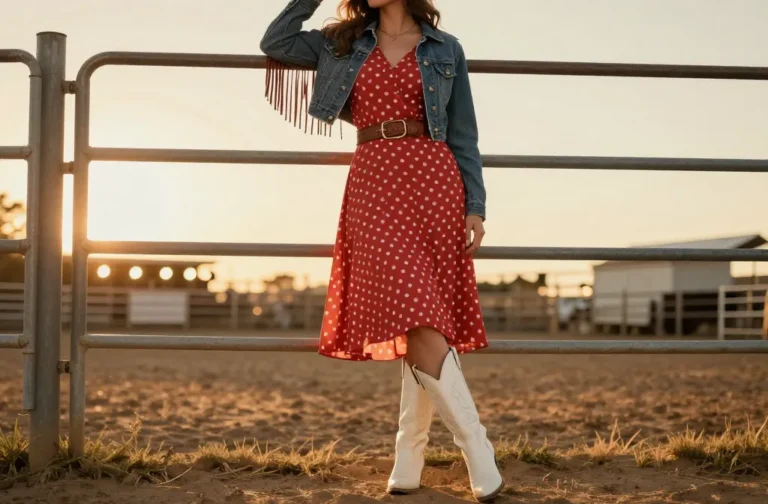
Getting the fit right is step one. Step two is knowing what to wear them with. The great news: Ariat’s range covers almost every occasion. A Rambler in distressed leather looks right with jeans and a tank for a casual day. A Mbride in snip toe with a midi dress is a date-night move. A Heritage Roper with pleated trousers is your “I want to be comfortable but put-together” uniform.
For the full styling breakdown — which toe shape goes with which hem, how heel height changes the vibe, and how to dress boots up or down — check out the cowboy boots outfit guide. It covers every boot type you own and what to pair it with, from festival dirt to dinner reservations.
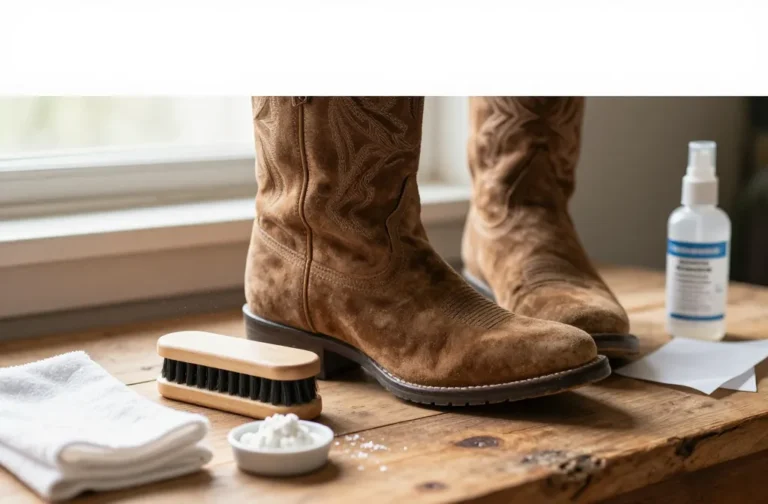
And once you’ve got your boots broken in and looking good, the cowboy boot care guide has the full maintenance routine — conditioning, cleaning, and storage — to keep them that way.
Frequently Asked Questions
Do Ariat boots run true to size?
Generally yes — Ariat’s official guidance is true to size, with a recommendation to size down if you’re between sizes. However, real-world fit varies by style: the Rambler runs roomier while the Mbride runs narrower, so always check the specific style’s reviews and use your Brannock measurement rather than your sneaker size as your baseline.
Should I size up or down in Ariat boots?
If you’re between sizes, size down for a snugger fit — leather stretches over time, especially through the instep and vamp, but it won’t shrink back. If your feet run wide, go up a width letter (D to EE) rather than a full size, since a longer boot won’t fix a narrow fit.
How long does it take to break in Ariat boots?
Most Ariat western boots need 1–2 weeks of short, consistent wear to feel fully broken in; paddock and roper styles can mold to your feet in 2–4 days. Speed up the process with thick socks, leather conditioner on tight spots, and short walking sessions rather than one marathon first wear.
What’s the difference between D and EE width in Ariat boots?
For men, D is standard (medium) width and EE is wide — an EE is about ½ inch wider across the ball of the foot. For women, D is already extra-wide, so most women’s Ariat boots come in B (standard/narrow) and C (wide) widths instead. Check the width letter on every pair, not just the size number.
Do Ariat boots stretch over time?
Yes — the leather stretches forward and molds to your foot shape, particularly through the instep and vamp area. The width won’t change dramatically (leather stretches forward, not sideways), which is why getting the width letter right from the start matters more than relying on break-in to fix a too-narrow boot.
How do I measure my calf for Ariat tall boots?
Sit in a chair with knees bent at 90 degrees, wearing the breeches or jeans you’ll pair with the boots. Have someone measure the circumference around the widest part of your calf, then compare that number to Ariat’s tall boot calf-width chart — standard, slim, full, or wide — to find your match.
Go Find Your Fit
Sizing boots isn’t rocket science, but it’s not guesswork either. Get measured, know your width letter, match the style to your foot shape, and do the five-point try-on before you commit. Your feet do a lot — they deserve boots that fit like they were made for them. Because with Ariat, they basically can be.
Questions or a specific style you’re deciding between? Drop it below — see y’all in the pit ✦